
Nehalennia
Selys, 1850
Sprites
Species Guides
4- Nehalennia gracilis(Sphagnum Sprite)
- Nehalennia integricollis(Southern Sprite)
- Nehalennia irene(Sedge Sprite)
- Nehalennia pallidula(Everglades Sprite)
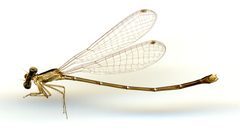
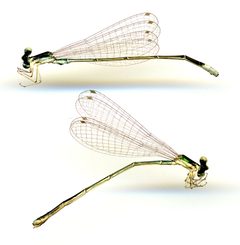
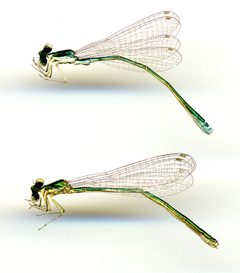
Nehalennia is a of very small in the Coenagrionidae, commonly known as Sprites. Most occur in North and South America, with one species, N. speciosa, distributed in Eurasia. Members of this genus are among the smallest odonates and are associated with specific wetland microhabitats.
Pronunciation
How to pronounce Nehalennia: /ˌne.həˈlɛn.i.ə/
These audio files are automatically generated. While they are not always 100% accurate, they are a good starting point.
Identification
Extremely small size distinguishes Nehalennia from most other ; among the smallest odonates. Specific identification to level requires examination of abdominal appendages and thoracic patterning. N. speciosa, the only Eurasian species, is known as the pigmy damselfly and is endangered.
Images
Habitat
Wetland including peatlands, bogs, and shallow pools; N. speciosa specifically occupies relict Alpine raised bogs with acidic, oligotrophic conditions and shows strong selection for flooded hollows with Carex rostrata, Rhynchospora alba, and Scheuchzeria palustris vegetation.
Distribution
North America, South America, and Eurasia; N. speciosa occurs in Central and Eastern Europe with peripheral in the Alps. Records from Denmark, Norway, Sweden, and Vermont, USA.
Seasonality
N. speciosa shows peak in the first decade of June; activity period corresponds with accumulation of superficial water in .
Behavior
N. speciosa exhibits strong microhabitat selection for specific vegetation types in flooded hollows; detection probability is generally low and decreases further in windy conditions.
Ecological Role
N. speciosa serves as an indicator of tyrphophilous (peatland ) wildlife and conservation value; in relict peatlands function as microrefugia for long-term conservation of .
Human Relevance
N. speciosa is endangered and of conservation concern due to loss and climate change threatening peripheral Alpine ; name derived from a Germanic/Celtic goddess worshipped in Roman-era Zeeland, Netherlands.