
Nehalennia irene
(Hagen, 1861)
Sedge Sprite
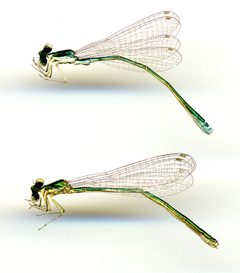
Nehalennia irene, commonly known as the sedge sprite, is a small in the Coenagrionidae. The exhibits female-limited color , with two distinct female morphs: an androchrome morph that resembles males in coloration and pattern, and a gynochrome morph that is dissimilar to males. Research indicates complex behavioral interactions between these morphs and males, with differential patterns of attraction, harassment, and refusal displays. The species is found in North America, particularly in association with sedge-dominated wetlands.
Pronunciation
How to pronounce Nehalennia irene: /ˌniːəˈlɛniə ɪˈriːni/
These audio files are automatically generated. While they are not always 100% accurate, they are a good starting point.
Identification
Nehalennia irene is distinguished from similar by its small size and association with sedge . The presence of two female color morphs—androchrome and gynochrome—provides a key identification feature. Males and androchrome females share similar coloration, while gynochrome females differ markedly. Specific distinguishing characters from not documented in available sources.
Images
Appearance
Small . Males and androchrome females share similar coloration and pattern. Gynochrome females display dissimilar coloration and pattern from males. Specific measurements and detailed color patterns not documented in available sources.
Habitat
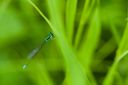
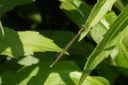
Associated with sedge-dominated wetlands and pond edges. Field observations indicate females of different morphs show differential use of pond edge , with androchrome females more frequently frequenting the pond's edge.
Distribution
North America; specifically recorded from Vermont, United States. Global presence indicated but detailed distribution records sparse.
Behavior
Males show indiscriminate mating attempts toward both female morphs overall, but males with high response intensity to model males are equally likely to grasp models of either morph. During field encounters, androchrome females are more likely to chase males, whereas gynochrome females display more refusal . Gynochrome females appear to be greater targets of sexual aggression at pond edges, though androchrome females more frequently occupy these areas.
Similar Taxa
- Other Nehalennia speciesSimilar small size and preferences; N. irene distinguished by specific female patterns and geographic distribution
More Details
Female polymorphism research
Nehalennia irene has been studied as a model for understanding the maintenance of female-limited color in . The androchrome-gynochrome polymorphism system provides evidence for hypotheses concerning differential male attraction and harassment as factors favoring morph coexistence.
Sources and further reading
- BugGuide
- GBIF taxonomy match
- iNaturalist taxon
- NCBI Taxonomy
- Catalogue of Life
- Don't Miss This UC Davis Seminar by Ecology Researcher Andrew Corbett | Bug Squad
- Bohart Museum Open House: 'Bark Beetle Forest Central' | Bug Squad
- You Won't Believe What You'll See at the Bohart Museum on Picnic Day | Bug Squad
- Why More Water Bears Are Heading for the Bohart Museum of Entomology | Bug Squad
- Why Do Some COVID-19 Patients Recover and Some Don't? | Bug Squad
- Pensoft Editorial Team | Blog - Part 27
- Male–female morph interactions in the damselflyNehalennia irene(Hagen)