
Anax
Leach, 1815
Emperors, Green Darners
Species Guides
5- Anax amazili(Amazon Darner)
- Anax concolor(blue-spotted comet)
- Anax junius(Common Green Darner)
- Anax longipes(Comet Darner)
- Anax walsinghami(giant darner)
Anax is a of large in the Aeshnidae, commonly known as emperors and green darners. The genus includes some of the largest and most powerful dragonflies in the world, with distributed across multiple continents. Several Anax species are notable long-distance migrants, with Anax junius (the common green darner) being one of the most studied migratory dragonflies in North America. The genus name derives from the ancient Greek word for 'lord' or 'king', reflecting their imposing size and predatory dominance.
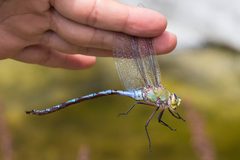
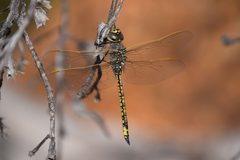
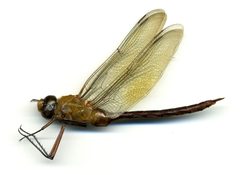
Pronunciation
How to pronounce Anax: /ˈænæks/
These audio files are automatically generated. While they are not always 100% accurate, they are a good starting point.
Identification
Anax are among the largest , with robust bodies and large that meet at the top of the . They have long, powerful and broad wings with dense venation. Species within the can be distinguished by coloration patterns, particularly on the and abdomen, and by geographic range. Anax junius has a distinctive green thorax and blue abdomen in males; Anax imperator (emperor dragonfly) shows similar coloration with additional diagnostic markings.
Images
Habitat
Found near freshwater bodies including ponds, lakes, slow-moving rivers, and wetlands. occupy diverse aquatic from temporary pools to permanent water bodies. Migratory species utilize a wide range of habitats along their routes.
Distribution
distribution spanning North America, Europe, Africa, Asia, and Australia. Individual have more restricted ranges: Anax junius occurs across North America; Anax imperator is widespread in Europe, North Africa, and western Asia; Anax parthenope occurs in southern Europe, North Africa, and Asia.
Seasonality
Activity patterns vary by and latitude. Temperate species are active primarily during warmer months. Migratory species such as Anax junius show distinct seasonal movements: northward in spring, breeding during summer, and southward return migration in autumn.
Diet
are aerial capturing flying insects including mosquitoes, flies, and other small insects. Nymphs are aquatic predators feeding on insect larvae, tadpoles, and small aquatic organisms.
Life Cycle
Hemimetabolous development with , nymph (aquatic), and stages. Nymphs develop in freshwater , with development duration varying by and environmental conditions. Some species have rapid larval development adapted to temporary water bodies. Adults emerge from nymphal and may live for several weeks to months.
Behavior
Several are powerful fliers capable of sustained, directed . Anax junius is known for long-distance , traveling hundreds to thousands of kilometers seasonally. are territorial around breeding sites, patrolling and defending airspace. Males engage in aerial combat with conspecifics.
Ecological Role
Important in both aquatic and terrestrial . Nymphs regulate of aquatic and small vertebrates. consume significant quantities of flying insects including pest . Serve as prey for birds, fish, and other predators.
Human Relevance
Used as bioindicators for wetland health and water quality. Anax junius has been studied as a potential behavioral endpoint in testing. Subject of citizen science monitoring through the Migratory Partnership. Some are popular with dragonfly watchers and photographers.
Similar Taxa
- AeshnaBoth are large aeshnid with meeting dorsally; Anax are generally larger with more robust and different color patterns.
- Anax parthenopeLesser emperor is smaller than Anax imperator with different thoracic markings and more restricted southern distribution.
Sources and further reading
- BugGuide
- Wikipedia
- iNaturalist taxon
- NCBI Taxonomy
- Catalogue of Life
- ESA Insect Macrophotography Workshop | Beetles In The Bush
- Citizen Scientists Needed for the Migratory Dragonfly Partnership
- This Dragonfly's Migratory Route is Even Longer than the Monarch Butterfly's
- So, how big do insects get? - Buglife Blog - Buglife
- Insect Migration (Part 1) - Buglife Blog - Buglife
- Mudo Pryfed (Rhan 1) - Buglife Blog - Buglife
- The foraging behavior of Anax junius (Odonata: Aeschnidae) and its potential as a behavioral endpoint in pesticide testing
- First-year seasonal growth regulation mechanism underlying storage root thickening in perennial Panax ginseng.