
Anax junius
(Drury, 1773)
Common Green Darner, Green Darner
Anax junius, the common green darner, is among the most abundant and widespread in North America, ranging from Canada to Panama and with in the Caribbean, Tahiti, and Asia. This large aeshnid is renowned for its extensive seasonal , with individuals traveling up to 2,800 km between northern breeding grounds and southern areas. The exhibits complex , with both migratory and resident cohorts coexisting at many locations. are powerful aerial , while aquatic nymphs are similarly voracious, making this species a significant component of both terrestrial and aquatic .
Pronunciation
How to pronounce Anax junius: //ˈænæks ˈdʒuːniəs//
These audio files are automatically generated. While they are not always 100% accurate, they are a good starting point.
Identification
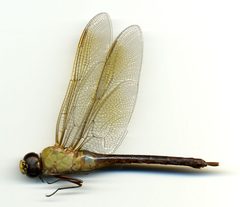
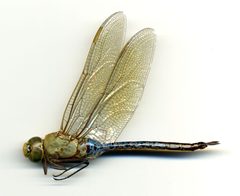
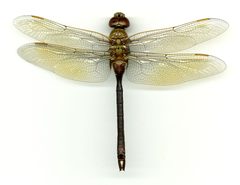
Large size and bright green coloration distinguish from most other North American . The combination of green , green with blue markings (males) or plain green/brown (females), and clear wings with amber bases separates this from other darners. Similar species include Anax longipes (comet darner), which has red abdomen and blue , and Anax walsinghami (giant darner), which is larger with more robust build and different abdominal patterning. In , the green darner's powerful, direct flight with occasional gliding contrasts with the more fluttering flight of smaller dragonflies.
Images
Habitat
utilize diverse open including wetlands, ponds, lakes, streams, and terrestrial areas far from water during . Nymphs develop in still or slow-moving waters: ponds, lakes, marshes, and slow streams, including eutrophic conditions. Tolerant of temporary waters and disturbed habitats. Found from sea level to montane elevations.
Distribution
North America from southern Canada through United States to Panama; Caribbean islands; Tahiti; Asia from Japan to mainland China. In North America, breeds throughout range with migratory individuals moving north in spring and south in fall. Genetic evidence indicates intercontinental with minimal structure across vast distances.
Seasonality
present year-round in southern parts of range; in northern areas, adults appear in spring (March-May) from migratory arrivals, with local June-September. Two cohorts in many : summer (emerges June-September, 3-month development) and generation (emerges following June, 11-month development with ). Peak activity during warm, sunny conditions.
Diet
Nymphs are aquatic , capturing prey with extensible ; diet includes aquatic insects, tadpoles, small fish, and other . are aerial predators capturing flying insects including mosquitoes, flies, butterflies, , and smaller . Foraging occurs during continuous or from perches.
Life Cycle
Hemimetabolous with aquatic nymphal stage and terrestrial stage. laid into water or aquatic vegetation. Nymphal development includes 10-12 instars. Two developmental : rapid summer development (~3 months, no ) or extended development (~11 months, with diapause as half-grown larvae). typically , beginning after sunset. Adults live several weeks to months. Threshold temperature for development: 8.7°C; summer requires ~1332 .
Behavior
Strong migratory with seasonal mass movements; southbound migrants travel up to 2,800 km. Radio-tracking reveals alternating periods of migratory and energy replenishment, with responses to wind and temperature similar to avian . regulate thoracic temperature during flight through behavioral adjustments: gliding less, flying faster, and increasing wingbeat frequency as ambient temperature decreases. Endothermic during flight with active . Males patrol territories and defend oviposition sites; tandem oviposition with female dipping into water while in flight with male attached.
Ecological Role
Top in both aquatic (nymph) and aerial () . Nymphs regulate of aquatic and small vertebrates. Adults consume significant quantities of flying insects including pest mosquitoes. Serve as prey for birds, fish, frogs, and other predators. Important bioindicator for wetland ecosystem health.
Human Relevance
Popular among watchers and photographers due to large size, bright coloration, and approachable . Used in behavioral and physiological research including studies of , , and effects. Nymphs occasionally used as by anglers. Subject of citizen science monitoring through Migratory Dragonfly Partnership. derives from resemblance to darning needle.
Similar Taxa
- Anax longipes (comet darner)Similar size and build but distinguished by red and blue versus green coloration of A. junius
- Anax walsinghami (giant darner)Larger size (up to 11 cm), more robust build, different abdominal patterning with blue and green rather than uniform green with blue markings
- Anax parthenope (lesser emperor)Old World similar in appearance but with brown and different wing venation; not sympatric in North America
More Details
Thermoregulation
First insect demonstrated to regulate body temperature during by altering heat production through behavioral modifications, with metabolic rate inversely proportional to ambient temperature.
Genetic structure
Exhibits high haplotype diversity (38 haplotypes documented) without phylogeographic structuring, indicating extensive across continents and supporting classification as essentially panmictic in eastern North America.
Population dynamics
Migratory and resident individuals may share haplotypes and occur across multiple genetic lineages, suggesting developmental plasticity rather than genetically distinct .
Sources and further reading
- BugGuide
- GBIF taxonomy match
- iNaturalist taxon
- NCBI Taxonomy
- Catalogue of Life
- Bug Spotlight | Entomology Research Museum
- Citizen Scientists Needed for the Migratory Dragonfly Partnership
- Buprestidae | Beetles In The Bush | Page 9
- This Dragonfly's Migratory Route is Even Longer than the Monarch Butterfly's
- ambush bugs | Beetles In The Bush
- dragonflies | Beetles In The Bush
- Migration in Odonata: a case study ofAnax junius
- The foraging behavior of Anax junius (Odonata: Aeschnidae) and its potential as a behavioral endpoint in pesticide testing
- EFFECT OF TEMPERATURE ON THE LIFE-CYCLE OF ANAX JUNIUS (ODONATA: AESHNIDAE) IN CANADA
- INFLUENCE OF TEMPERATURE AND HUMIDITY ON THE EMERGENCE BEHAVIOUR OFANAX JUNIUS(ODONATA: AESHNIDAE)
- The effects of chlorpyrifos on cholinesterase activity and foraging behavior in the dragonfly, Anax junius (Odonata)
- The Diet and Foraging Behavior of the Larval Dragonfly Anax Junius (Aeshnidae), with an Assessment of the Role of Refuges and Prey Activity
- Dependence of Flight Behavior and Heat Production on air Temperature in the Green Darner Dragonfly Anax Junius (Odonata: Aeshnidae)
- AN EXCEPTIONALLY EARLY AND INFORMATIVE ARRIVAL OF ADULTANAX JUNIUSIN ONTARIO (ODONATA: AESHNIDAE)
- Genetic diversity and widespread haplotypes in a migratory dragonfly, the common green darner Anax junius