
Anax amazili
(Burmeister, 1839)
Amazon Darner
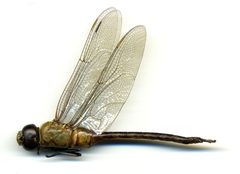
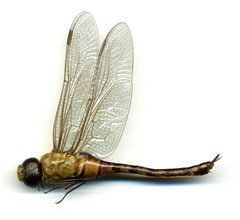
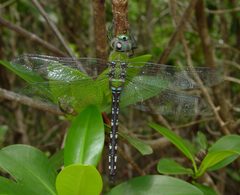
Anax amazili, the Amazon Darner, is a large tropical in the Aeshnidae. It ranges from the southern United States through Central and South America to Argentina. are associated with open ponds and marshes, including temporary wetlands. The reaches 70–74 mm in body length with distinctive green facial markings and a brown with blue to green basal spots.
Pronunciation
How to pronounce Anax amazili: //ˈænæks əˈmæzɪlaɪ//
These audio files are automatically generated. While they are not always 100% accurate, they are a good starting point.
Identification
Distinguished from similar darners by the combination of green with a single dark triangle on the , green , and brown with blue to green basal spots creating a ringed appearance. The first two abdominal segments match the green coloration of the thorax, unlike the remainder of the abdomen. Size (70–74 mm body length, 48–52 mm hindwing) is consistent with other large Anax but specific color pattern differs.
Images
Habitat
Open ponds and marshes, including temporary wetlands. Associated with standing freshwater in tropical and subtropical regions.
Distribution
Widespread in the Americas from the southern United States southward through Central America, the Caribbean, and South America to Argentina. In Brazil, recorded from northeast, southeast, and southern regions (Rio Grande do Sul). Present throughout much of South America including French Guiana.
Similar Taxa
- Anax juniusCommon Green Darner; similar large size and general body plan, but differs in facial pattern and abdominal coloration
- Anax concolorOccurs sympatrically in Brazil; distinguished by color pattern differences
- Anax longipesAnother Brazilian Anax ; differs in morphological details and preferences
More Details
First southern Brazil record
First record from Rio Grande do Sul state in southern Brazil extended the known distribution approximately 1000 km southward from previous records in northeast and southeast Brazil
Sources and further reading
- BugGuide
- Wikipedia
- GBIF taxonomy match
- iNaturalist taxon
- NCBI Taxonomy
- Catalogue of Life
- ESA Insect Macrophotography Workshop | Beetles In The Bush
- Citizen Scientists Needed for the Migratory Dragonfly Partnership
- This Dragonfly's Migratory Route is Even Longer than the Monarch Butterfly's
- So, how big do insects get? - Buglife Blog - Buglife
- Insect Migration (Part 1) - Buglife Blog - Buglife
- Mudo Pryfed (Rhan 1) - Buglife Blog - Buglife
- Odonata, Aeshnidae, Anax amazili (Burmeister, 1839): first record for southern Brazil [with erratum]