
Glenurus luniger
Gerstaecker, 1894
Western Picture-winged Antlion
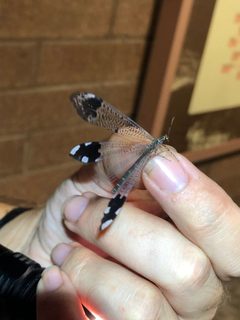
Glenurus luniger is a of antlion in the Myrmeleontidae, distinguished by its striking wing pattern with black, white, and pink wingtips. The species occurs in Central America and North America. are rarely observed due to their cryptic , while larvae are predatory and inhabit sandy soils. The "Western Picture-winged Antlion" reflects both its geographic range and distinctive wing markings.
Pronunciation
How to pronounce Glenurus luniger: /ɡləˈnjʊrəs ˈluːnɪdʒər/
These audio files are automatically generated. While they are not always 100% accurate, they are a good starting point.
Identification
are distinguished from other antlions by the bold black, white, and pink patterning on the wingtips. The clubbed separate all antlions from and , which have long, thread-like antennae. Among antlions in its range, the distinctive wing pattern separates Glenurus luniger from the pit-digging Myrmeleon and other . Larvae of Glenurus do not construct the classic funnel-shaped pits characteristic of Myrmeleon; instead they bury themselves just below the soil surface and wait for prey.
Images
Habitat
Larvae inhabit dry, sandy or powdery soils, often in sheltered locations such as beneath rock overhangs, at the base of trees, under bridges, or in the dirt floors of old barns and sheds. These sites remain perpetually dry. are found among tall grasses and vegetation, particularly at dusk.
Distribution
Recorded from Central America and North America. Within North America, observations include Arizona and other southwestern states. The occurs in the southern United States and extends southward through Central America.
Seasonality
are most frequently observed at dusk and are attracted to lights at night. Activity patterns for larvae are continuous where conditions remain suitable, as they remain buried in soil year-round until .
Life Cycle
are laid in sandy soil. Larvae develop underground, burying themselves just below the surface to ambush prey rather than constructing pits. Upon completing development, larvae spin silken cocoons underground, incorporating grains of sand, and pupate within. emerge from these subterranean pupal chambers.
Behavior
are strongly cryptic: when alighting on grass stems or twigs, they align their bodies to flatten seamlessly against the substrate, rendering them nearly invisible. They fly clumsily. Larvae are sit-and-wait that detect prey through vibrations and flick sand to dislodge victims that contact the soil surface above them. When capturing prey, larvae inject through hollow to paralyze and externally digest the victim, then imbibe the liquefied tissues and eject the dry carcass.
Ecological Role
Larvae function as subterranean of small ground-dwelling arthropods including ants, beetles, and other insects. They contribute to soil turnover through their burrowing activities. may consume soft-bodied insects and pollen, though feeding habits remain poorly documented.
Human Relevance
Similar Taxa
- Myrmeleon speciesMyrmeleon larvae construct classic funnel-shaped pits in sandy soil, while Glenurus luniger larvae bury themselves without digging pits. Myrmeleon lack the distinctive black, white, and pink wingtip patterning of Glenurus.
- Scotoleon speciesScotoleon males have extremely elongated with prominent claspers, more exaggerated than in Glenurus. Scotoleon lack the bold wingtip coloration of Glenurus luniger.
- Vella speciesVella are true giants among antlions with wingspans of 100-120 mm or more, substantially larger than Glenurus luniger. Vella lack the distinctive wingtip patterning.
More Details
Larval hunting strategy
Unlike the pit-digging Myrmeleon larvae familiar from popular culture, Glenurus luniger larvae belong to the majority of antlion that do not construct traps. They simply bury themselves and wait with jaws agape.
Wing pattern significance
The Glenurus contains three North American , all characterized by bold wingtip coloration. This patterning is unique among antlions north of Mexico and serves as the primary field mark for identifying .