
Stagmomantis carolina
(Johansson, 1763)
Carolina mantis, Carolina mantid
Stagmomantis carolina, the Carolina mantis, is a native North American ranging from New Jersey south to Florida and west to Arizona. It is smaller than introduced mantid species such as the Chinese mantis (Tenodera sinensis) and European mantis (Mantis religiosa), typically exhibiting gray or brown coloration. The species overwinters as in protective cases called , with nymphs emerging in spring and present from July through October. It serves as an important in gardens and natural landscapes, with documented by the tachinid fly Masiphya confusa.
Pronunciation
How to pronounce Stagmomantis carolina: /stægmoʊˈmæntɪs kæroʊˈlaɪnə/
These audio files are automatically generated. While they are not always 100% accurate, they are a good starting point.
Identification
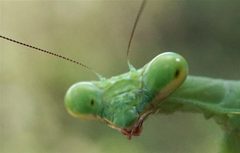
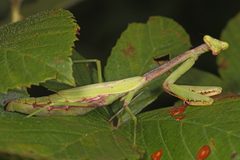
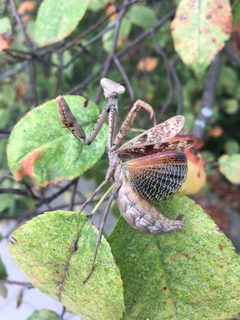
The Carolina mantis is distinguished from larger introduced by its smaller size and more slender build. typically measure 4.5–6 cm in length, with females larger than males. Coloration ranges from gray to brown, sometimes with greenish tones, but lacks the bold patterning seen in some species. The () is elongated and somewhat flattened, differing from the more rounded cases of Tenodera species. The pronotum is relatively narrow compared to the Chinese mantis. Males have longer wings that extend past the , while females have shorter wings.
Images
Habitat
Old fields, meadows, gardens, and landscapes with scattered shrubs and herbaceous vegetation. Found in dominated by grasses and forbs with upright vegetation suitable for depositing .
Distribution
Native to southeastern and central United States, ranging from New Jersey south to Florida and west to Arizona. Documented from Kentucky, Mississippi, Missouri, Texas, and throughout the eastern and central United States.
Seasonality
(single per year). present from July to October with peak abundance in August. produced from August to October. Nymphs emerge from in spring, typically April to May.
Diet
consuming a wide variety of insects and spiders found in gardens and landscapes. Documented to prey on brown marmorated stink bugs (Halyomorpha halys).
Life Cycle
overwinter in deposited on upright vegetation such as tree branches or meadow plant stems. Each ootheca contains 25–50 eggs. Nymphs hatch in spring (April–May) and develop through summer. present July–October. Mating occurs in late summer. Females produce multiple oothecae. Adult lifespan estimated at 2–3 months.
Behavior
Sit-and-wait employing ambush hunting strategy. Newly hatched nymphs are highly active, racing about and seeking hiding places. Exhibits with females larger than males. Demonstrates learned avoidance of aposematic prey after prior exposure, particularly during stages.
Ecological Role
in old field and garden . Serves as for tachinid flies, with documented rates exceeding 80% in some . May contribute to of pest insects including stink bugs.
Human Relevance
Occasional stowaway on Christmas trees when are deposited on evergreen branches; hatchlings may emerge indoors if brought into heated homes. Valued as native in gardens and landscapes. Subject of ecological research on predator learning and aposematic signal detection.
Similar Taxa
- Tenodera sinensis (Chinese mantis)Larger size (7–10 cm), green or brown coloration with lateral yellow stripe on forewing, more robust pronotum, and rounded . Introduced .
- Mantis religiosa (European mantis)Larger size, distinctive black and white 'target' marking on inner upper foreleg, more elongated body. Introduced with more northerly distribution.
- Stagmomantis limbataWestern with overlapping range in southwestern United States; distinguished by morphological features including abdominal markings.
Sources and further reading
- BugGuide
- GBIF taxonomy match
- iNaturalist taxon
- NCBI Taxonomy
- Catalogue of Life
- Surviving winter, Part III: Egg cases of the Praying mantis, Mantis religiosa, Chinese mantis, Tenodera sinensis, and Carolina mantis, Stagmomantis carolina — Bug of the Week
- Decorations on the Christmas tree: Egg cases of the European mantis, Mantis religiosa, Chinese mantis, Tenodera sinensis, and Carolina mantis, Stagmomantis carolina — Bug of the Week
- Decorations on the Christmas tree: Egg cases of the European mantis, Mantis religiosa, Chinese mantis, Tenodera sinensis, and Carolina mantis, Stagmomantis carolina — Bug of the Week
- Bug Eric: Grand Finale
- Archive — Bug of the Week
- sphinx moths | Beetles In The Bush
- NOTES ON THE BIOLOGY OF STAGMOMANTIS CAROLINA. (ORTHOPTERA, MANTIDAE)
- Life History and Population Characteristics of the MantidStagmomantis carolina(Mantodea: Mantidae)
- Parasitism ofStagmomantis Carolina(Mantodea: Mantidae) byMasiphya confusa(Diptera: Tachinidae)
- Experience with Aposematic Defense Triggers Attack Bias in a Mantid Predator (Stagmomantis carolina)
- A synoptic review of the genus Stagmomantis (Mantodea: Mantidae)