
Ypsolopha
Latreille, 1796
Species Guides
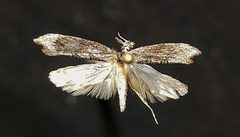
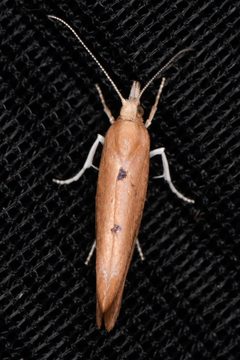
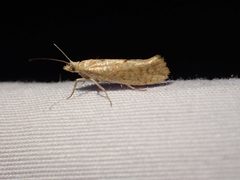
23Ypsolopha is a of micromoths comprising over 120 described , representing approximately 95% of the Ypsolophidae's known world diversity. The genus is primarily Holarctic in distribution, with the majority of species recorded from temperate regions. Species exhibit considerable variation in external , though male and female genitalia are remarkably homogeneous across the genus. are predominantly and display a distinctive resting posture with the lowered and body elevated.
Pronunciation
How to pronounce Ypsolopha: //ɪpˈsɒləfə//
These audio files are automatically generated. While they are not always 100% accurate, they are a good starting point.
Identification
identification relies heavily on examination of male and female genitalia due to the homogeneous nature of these structures and the variability of external . has been employed for species discrimination, with genetic distances between species such as those feeding on Adesmia shrubs in the Andes ranging 7.9–8.1% (K2P).
Images
Habitat
Primarily associated with forested and shrubland . Larvae occur on woody plants including representatives of Aceraceae, Rosaceae, Fagaceae, Polygonaceae, Fabaceae, and Pinaceae. Some inhabit arid highlands, such as Y. chicoi at 3400 m elevation in the Andes, and clay-steppe environments in European Russia.
Distribution
Holarctic temperate region with highest diversity in the Northern Hemisphere. Records from Europe, Russia, China, Korea, Japan, North America, and limited representation in the Neotropical Region including Chile and northern Andes. Approximately 30 recorded from the Russian Far East, representing one-fourth of global diversity.
Diet
Larvae are phytophagous, feeding on leaves, buds, flowers, and fruits of plants. do not feed; larvae are the primary feeding stage.
Host Associations
- Acer ginnala - larval For Y. acerella
- Crataegus maximowiczii - larval For Y. atrobrunnella
- Pyrus sp. - larval For Y. atrobrunnella
- Pinus tabulaeformis - larval For Y. lutisplendida
- Muehlenbeckia fruticulosa - larval For Y. chicoi; first record of Polygonaceae as for Neotropical Ypsolopha
- Adesmia verrucosa - larval For Y. moltenii
- Adesmia atacamensis - larval For Y. moltenii
- Adesmia spinosissima - larval For undescribed Ypsolopha sp.
- Ephedra fragilis - larval For Y. milfontensis
- Ephedra distachya - larval For Y. admirandella
- Quercus pubescens - larval For Y. ustella in Turkey
Life Cycle
Complete with , larva, pupa, and stages. Larvae collected in April have been observed to produce adults in May. The pupal stage of Y. ustella averages 18 days under laboratory conditions. Larvae pupate in cocoon-like structures attached to plants.
Behavior
are or rarely . Standard collecting methods including light trapping and rearing from larvae are often ineffective; adults of many fly to light infrequently. Larvae are primarily nocturnal and exhibit two defensive involving wiggling and jumping when disturbed. Larvae of most species live solitary on plants and feed partially concealed in silk webs on leaves, buds, and twigs.
Ecological Role
Phytophagous herbivores; larvae function as folivores and florivores on woody plants. The represents a significant component of micromoth diversity in temperate forest and shrubland .
Human Relevance
Some have significance as agricultural pests. The is of interest to entomologists due to its taxonomic diversity and the challenges associated with specimen collection.
Similar Taxa
- Other Ypsolophidae generaYpsolopha comprises ~95% of diversity; other are minor components. Distinguished by genital and associations where known.
More Details
Thermophily
Ypsolophid are thermophilic, showing a propensity for relatively higher temperatures in southern regions of the Russian Far East.
Collection challenges
The group is particularly difficult to collect using standard methods. Larvae are solitary and hard to find; fly to light infrequently. Specimen acquisition is considered a significant event for entomologists.
Taxonomic activity
Recent decades have seen substantial increase in described , particularly from East Asia. The number of known species from the Russian Far East has more than doubled in the last decade.
Sources and further reading
- BugGuide
- Wikipedia
- GBIF taxonomy match
- iNaturalist taxon
- NCBI Taxonomy
- Catalogue of Life
- Uncategorized | Blog - Part 38
- Pensoft Editorial Team | Blog - Part 143
- Catch me if you can: 2 new species of moth from the Russian Far East | Blog
- Ypsolopha chicoi sp. n., the second representative of the widespread micromoth genus Ypsolopha Latreille (Lepidoptera, Ypsolophidae) from the Andes of northern Chile
- Five new East-Asian species of the genus Ypsolopha Latreille (Lepidoptera: Ypsolophidae)
- Ypsolopha milfontensis Corley & Ferreira, a new species from the Portuguese coast (Lepidoptera: Ypsolophidae)
- Ypsolopha admirandella sp. n. (Lepidoptera: Ypsolophidae), a new European species from the steppes of Russia
- Figures 5- 6 from: Vargas HA (2024) On Ypsolopha micromoths (Lepidoptera, Ypsolophidae) associated with Adesmia shrubs (Fabaceae) in the arid western slope of the central Andes. ZooKeys 1195: 131-138. https://doi.org/10.3897/zookeys.1195.116134
- Figure 7 from: Vargas HA (2024) On Ypsolopha micromoths (Lepidoptera, Ypsolophidae) associated with Adesmia shrubs (Fabaceae) in the arid western slope of the central Andes. ZooKeys 1195: 131-138. https://doi.org/10.3897/zookeys.1195.116134
- <p class="HeadingRunIn" align="left">Review of the genus Ypsolopha Latreille, 1796 from China (Lepidoptera: Ypsolophidae)
- On Ypsolopha micromoths (Lepidoptera, Ypsolophidae) associated with Adesmia shrubs (Fabaceae) in the arid western slope of the central Andes
- Contribution to the knowledge of Ypsolophidae from forested habitats of Southern Italy with an update of the Italian checklist of the genus Ypsolopha Latreille 1796 (Lepidoptera: Yponomeutoidea)
- Wing color and pattern variations in the Turkish population of Ypsolopha ustella (Clerck, 1759) on oak and some additional notes (Lepidoptera, Ypsolophidae)
- Figures 1-4 from: Vargas HA (2024) On Ypsolopha micromoths (Lepidoptera, Ypsolophidae) associated with Adesmia shrubs (Fabaceae) in the arid western slope of the central Andes. ZooKeys 1195: 131-138. https://doi.org/10.3897/zookeys.1195.116134
- The genome sequence of the Wainscot Smudge, Ypsolopha scabrella (Linnaeus, 1761).