
Ypsolopha canariella
(Walsingham, 1881)
Canary Ypsolopha Moth
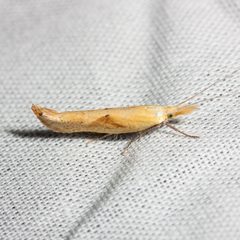
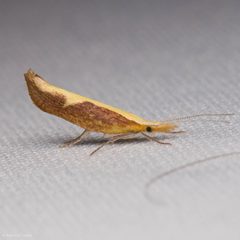
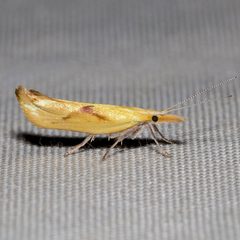
Ypsolopha canariella is a small in the Ypsolophidae, first described by Lord Walsingham in 1881. It occurs across much of North America from sea level to 1,830 meters elevation, inhabiting diverse environments from mixed wood forests to semi-arid scrubland and prairies. The has a wingspan of approximately 20 mm and are active from June through September.
Pronunciation
How to pronounce Ypsolopha canariella: /ɪpˈsɒloʊfə kəˌnæriˈɛlə/
These audio files are automatically generated. While they are not always 100% accurate, they are a good starting point.
Identification
Distinguished from other Ypsolopha by geographic distribution and ; active June–September. Specific diagnostic morphological features for separating Y. canariella from are not documented in available sources.
Images
Appearance
Small with wingspan of approximately 20 mm. Specific coloration and pattern details are not documented in available sources.
Habitat
Occurs in mixed wood forests, semi-arid scrubland, prairies, and badlands. Found from sea level to elevations of 1,830 meters.
Distribution
Widespread across North America. In Canada: British Columbia, Alberta, Manitoba, Saskatchewan, and Ontario. Present throughout most of the continental United States.
Seasonality
active from June to September.
Life Cycle
Larvae of Ypsolophidae are known to live and feed in webs on leaves, buds, and twigs of plants, and pupate in cocoons attached to plants. Whether Y. canariella specifically follows this pattern has not been documented.
Behavior
of many Ypsolophidae rest in an unusual posture: upside down with stretched forward. Whether Y. canariella exhibits this specifically has not been documented. Adults fly to light infrequently compared to many other species.
Similar Taxa
- Other Ypsolopha speciesSimilar small size and general ; identification requires examination of genitalia or other subtle characters not specified for Y. canariella in available sources.
More Details
Collection difficulty
Ypsolophid are notoriously difficult to collect. Standard methods such as rearing from larvae or light trapping are often ineffective, as larvae are solitary and hard to find, and fly to light infrequently.
Basionym
Originally described as Cerostoma canariella Walsingham, 1881.