
Pandemis cerasana
(Hübner, 1786)
barred fruit-tree tortrix
Pandemis cerasana is a tortricid native to northern Eurasia, introduced to North America where it was first recorded in Victoria, British Columbia in 1964. The is a leaf roller whose larvae feed on various deciduous trees and shrubs, with notable damage to fruit trees including cherry, apple, and pear. fly from June to August in western Europe, with two per year.
Pronunciation
How to pronounce Pandemis cerasana: /pænˈdiːmɪs sɛrəˈsɑːnə/
These audio files are automatically generated. While they are not always 100% accurate, they are a good starting point.
Identification
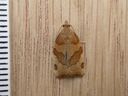
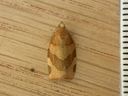
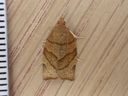
Distinguished from similar tortricid moths by the combination of: forewing ground color variable but always with a large dark chestnut brown V marking and dark brown lateral spot; sinuous, slightly oblique outer forewing margin; male with basal notch; and resting posture with bell-shaped wings flattened. The V-shaped forewing marking is particularly distinctive among Pandemis .
Images
Habitat
Woodland areas, gardens, and orchards. Associated with deciduous trees and shrubs. In North America, specifically linked to Garry oak in British Columbia.
Distribution
Native to Europe from the Iberian Peninsula to the Ural Mountains and Caucasus; eastward to southern Siberia, Kazakhstan, Mongolia, China, the Far East, Asia Minor, and Iran. Introduced to North America: first recorded at Victoria, British Columbia in 1964. GBIF records confirm presence in Belgium.
Seasonality
In western Europe, fly from June to August, mainly from dusk into night. Two per year; the second generation overwinters as larvae.
Diet
Larvae are , feeding on various deciduous trees and shrubs including Abies, Alnus, Acer, Betula, Crataegus, Fraxinus, Quercus, and fruit trees (especially apple and pear, Corylus, Ribes, Rubus, Prunus). In North America, has been observed feeding preferentially on Garry oak (Quercus garryana).
Host Associations
- Quercus garryana - preferred in North America
- Malus - fruit tree
- Pyrus - fruit tree
- Prunus - cherry and plum
- Agathis montana - braconid recorded in Turkey
Life Cycle
Two per year in western Europe. Second generation larvae overwinter. Pupae are formed in rolled leaves or other sheltered locations. details in North America may differ; specific timing not fully documented.
Behavior
Larvae are leaf rollers, constructing shelters by rolling or tying leaves. are , flying from dusk into night.
Ecological Role
Herbivore causing sporadic defoliation of deciduous trees and shrubs. In orchards, recognized as a pest causing damage to cherry and other fruit trees. Serves as for including Agathis montana. and appear to have negligible impact on in at least some regions.
Human Relevance
Recognized agricultural and horticultural pest, particularly in cherry orchards and other fruit tree operations. Introduced in North America with potential economic impact on fruit production and native oak .
Similar Taxa
- Other Pandemis speciesShare -level characteristics including general wing shape and resting posture; distinguished by specific forewing pattern elements, particularly the chestnut brown V marking and lateral spot combination in P. cerasana
- Other Tortricinae leaf rollersSimilar larval and general ; require examination of forewing markings and male structure for definitive identification
More Details
North American introduction
First confirmed North American record at Victoria, British Columbia in 1964. No additional recovery points reported in early literature, suggesting limited or slow spread at time of initial detection. Association with Garry oak in this region represents a novel relationship compared to Eurasian .
Population dynamics
Local changes have been documented, with sporadic defoliation events. and were found to be negligible factors in in at least one studied population.
Sources and further reading
- BugGuide
- Wikipedia
- GBIF taxonomy match
- NCBI Taxonomy
- Catalogue of Life
- LIFE HISTORY AND IMMATURE STAGES OF PANDEMIS CERASANA (LEPIDOPTERA: TORTRICIDAE)
- Agathis Montana Shestakov (Hymenoptera: Braconidae), A New Parasitoid Of Pandemis Cerasana Hübner (Lepidpotera: Tortricidae) In Turkey
- Biology of the barred fruit-tree tortrix,Pandemis cerasana(Hübner) (Lepidoptera: Tortricidae), causes damage in cherry orchards