
Dichelia
Guenée, 1845
Species Guides
1- Dichelia histrionana(Spruce Tortrix)
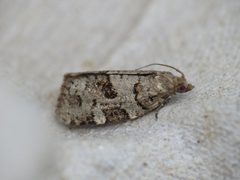
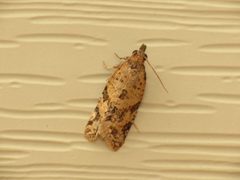
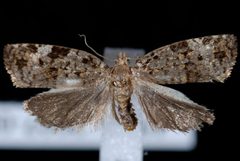
Dichelia is a of tortrix moths in the tribe Archipini, established by Guenée in 1845. The genus includes at least five described distributed across Europe, North Africa, and the Mediterranean region. One species, D. cedricola, has been documented as a significant pest of Lebanese cedar (Cedrus libani), causing needle drop and bud damage through larval feeding. Larvae construct silk-bound needle nests and overwinter in protective silk coverings on trees.
Pronunciation
How to pronounce Dichelia: /dɪˈkiːliə/
These audio files are automatically generated. While they are not always 100% accurate, they are a good starting point.
Identification
-level identification requires examination of genitalia and wing pattern characters typical of Archipini. within Dichelia are distinguished by forewing pattern elements and male genitalia structure. D. cedricola specifically can be recognized by association with Cedrus libani plants and biometric measurements: female 11.1±1.3 mm body length with 18.7±2.6 mm wingspan, males 9.4±1.5 mm body length with 15.7±2.6 mm wingspan; fourth-fifth instar larvae 12.5±2.6 mm; pupae 9.7±1.2 mm.
Images
Habitat
Associated with coniferous forests, particularly cedar stands. D. cedricola occurs in Lebanese cedar forests at elevations of 900–1450 m with Mediterranean climate characterized by winter rainfall, summer drought, and snow at higher elevations; substrates include rocky calcareous and dolomitic soils with red Mediterranean soil development.
Distribution
Recorded from Denmark, Norway, Sweden (GBIF); France, Turkey, Lebanon, Syria (D. cedricola records); and North Africa (Algeria, D. numidicola). The has a predominantly western Palearctic distribution with Mediterranean center of diversity.
Seasonality
D. cedricola active from April to November in Syria; emerge in June, with -laying from mid-June to mid-July; larval feeding continues through November; dormancy from November to April.
Diet
D. cedricola larvae feed on needles and new buds of Lebanese cedar (Cedrus libani), binding needles with silk to form feeding nests. Second instar larvae also destroy buds. Diet of other Dichelia is not documented.
Host Associations
- Cedrus libani - Lebanese cedar; sole documented for D. cedricola
Life Cycle
D. cedricola has a one-year cycle: hatch in 7–12 days (mean 11 days); five larval instars with first instar feeding on needles, second instar feeding on needles and buds for 3–4 weeks, third instar appearing late summer and feeding until mid-November; fourth and fifth instars active April–May; May–June with ~13 day pupal period; June. occurs as third instar larvae in silk-covered dry buds or needle bundles. Females lay up to ~125 eggs per individual from mid-June to mid-July, deposited in two alternating rows on needles (maximum 28 eggs per needle).
Behavior
Larvae construct nests by binding 4–6 needles together with silk threads. larvae prepare protective sites by covering dry buds with silk layers and using dry needle bundles. Fourth and fifth instar feeding causes more severe damage than younger larvae, resulting in needle browning and drop.
Ecological Role
D. cedricola acts as a pest in Lebanese cedar , causing needle loss and bud mortality. In Turkey, have been associated with 3% reduction in cedar forest growth rate and damage to 22.2 hectares during 1997–2000. Tree weakening from infestation may reduce resistance to adverse conditions and .
Human Relevance
D. cedricola is an economically significant forest pest affecting Cedrus libani, a culturally and ecologically important tree native to the eastern Mediterranean. Control measures have been identified as requiring further investigation.
Similar Taxa
- Other Archipini generaSimilar wing patterns and genitalia structure; requires dissection and association data for reliable separation. D. cedricola specifically distinguished by association with Cedrus libani and documented biometric measurements.
More Details
Taxonomic note
One source erroneously listed D. cedricola in Thaumetopocidae; this is a typographical error, with Tortricidae consistently cited throughout the primary literature and all authoritative databases.