
Dichelia histrionana
(Frölich, 1828)
Spruce Tortrix
A small tortricid with a wingspan of 17–22 mm, found across northern and central Europe. are active from late May through August. The is associated with coniferous forests, where larvae develop as needle miners on spruce and fir trees.
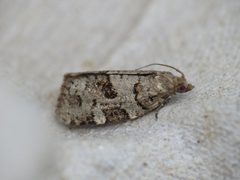
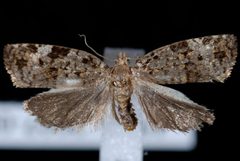
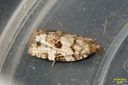
Pronunciation
How to pronounce Dichelia histrionana: //daɪˈkiːliə hɪˌstriːəˈnɑːnə//
These audio files are automatically generated. While they are not always 100% accurate, they are a good starting point.
Images
Habitat
Coniferous forests dominated by spruce and fir trees.
Distribution
Fennoscandia to Belgium, Italy and Greece; eastward from the Netherlands through Poland to Romania.
Seasonality
on wing from end of May to late August. Larvae present from August through June of the following year.
Diet
Larvae feed on Picea (spruce) and Abies (fir) .
Life Cycle
Overwinters as a young larva inside a mined needle. Larval development spans from August to June of the following year, suggesting a cycle with extended larval .
Behavior
Larvae are needle miners, feeding within conifer needles.
Ecological Role
Specialized herbivore of coniferous trees; contributes to natural needle turnover in spruce and fir stands.
Human Relevance
Minor forestry pest; "Spruce Tortrix" reflects association with economically important timber .