
Argyrotaenia pinatubana
(Kearfott, 1905)
Pine Tube Moth
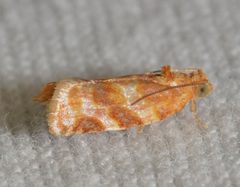
The Pine Tube is a small tortricid moth native to eastern North America. Its larvae feed primarily on eastern white pine, constructing distinctive tube-like shelters by binding needles together with silk. The produces two annually and is an occasional pest in pine plantations and Christmas tree farms.
Pronunciation
How to pronounce Argyrotaenia pinatubana: //ˌɑːr.dʒɪ.roʊˈtiː.ni.ə ˌpɪn.əˈtuː.bænə//
These audio files are automatically generated. While they are not always 100% accurate, they are a good starting point.
Identification
Distinguished from other Argyrotaenia by association with Pinus strobus as primary . The specific epithet 'pinatubana' refers to the larval tube-building . are difficult to separate from related species without genitalia examination; larval on white pine needles bound into tubes is diagnostic. Similar to A. velutinana (Red-banded Leafroller), which has broader host range and different larval shelter construction.
Images
Habitat
Associated with eastern white pine stands, including natural forests, plantations, and Christmas tree farms. Occurs in both mature and young pine stands where tree is present.
Distribution
Eastern North America: Canada (southern Ontario, Quebec) south to Florida, west to Wisconsin. Core range corresponds to distribution of primary Pinus strobus.
Seasonality
Two per year. active in spring and again in mid-summer. Exact timing varies with latitude; earlier in southern part of range.
Diet
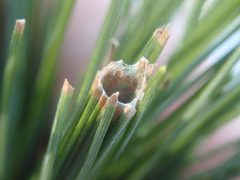
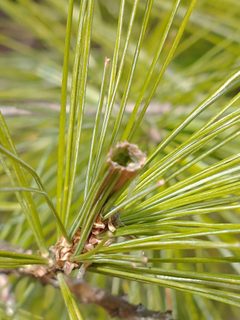
Larvae feed primarily on needles of Pinus strobus (eastern white pine). Young larvae mine needle tissue; older larvae bind multiple needles together with silk to form tube-like shelters, feeding from within. Specific feeding on other pine has not been documented.
Host Associations
- Pinus strobus - primary Larvae feed on needles, constructing silk-bound tube shelters
Life Cycle
Two annually. laid on pine needles. Larvae feed within silk-bound tubes constructed from multiple needles. occurs within the tube or in leaf litter. emerge to mate and lay eggs for subsequent generation. stage not explicitly documented in sources.
Behavior
Larvae are solitary tube-dwellers, binding 2–5 pine needles together with silk to form a feeding shelter. They retreat into the tube when disturbed and feed nocturnally from this protected position. are and attracted to light.
Ecological Role
Specialized herbivore of eastern white pine. Larval feeding causes needle browning and reduced growth in heavy ; may contribute to natural pruning in forest settings. Serves as prey for and in pine .
Human Relevance
Occasional pest in Christmas tree plantations and white pine nurseries. Larval feeding causes aesthetic damage to trees intended for ornamental use. Control rarely needed in natural forests; monitoring recommended in commercial operations.
Similar Taxa
- Argyrotaenia velutinanaSimilar appearance but broader range (deciduous trees, herbs, fruit crops); larval shelters are leaf rolls rather than pine needle tubes; more and economically significant as orchard pest
- Choristoneura pinusAnother pine-feeding tortricid, but larvae feed in buds and shoots rather than constructing needle tubes; larger with different markings
More Details
Nomenclature
Originally described as Eulia pinatubana by Kearfott in 1905; transferred to Argyrotaenia. The specific epithet combines 'pina-' (pine) with 'tubana' (tube), referencing the larval shelter-building .
Taxonomic Note
Member of Archipini, the largest tribe of Tortricidae. Argyrotaenia contains approximately 30 North American , many economically significant as agricultural and forestry pests.