
Archips packardiana
(Fernald, 1886)
spring spruce needle moth, spruce needleworm
Archips packardiana is a tortricid whose larvae are specialized feeders on spruce needles. The overwinters as a tiny larva inside a mined needle, resuming feeding in spring before moving to new foliage. Commonly known as the spring spruce needle moth or spruce needleworm, it occurs throughout most of Canada and the northeastern United States. Despite its , typically remain at low densities and cause minimal damage to trees.
Pronunciation
How to pronounce Archips packardiana: /ˈɑːrkɪps pæˌkɑːrdˈiɛnə/
These audio files are automatically generated. While they are not always 100% accurate, they are a good starting point.
Identification
Distinguished from other Archips by its association with spruce (Picea) as the primary , its spring-feeding larval , and the characteristic needle-mining of early instars. The specific epithet packardiana honors the entomologist Alpheus Spring Packard. Accurate identification to species level typically requires examination of genitalia or molecular markers.
Images
Appearance
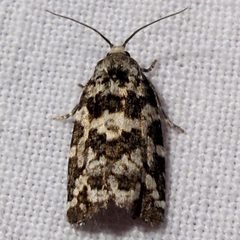
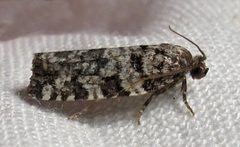
have the typical tortricid form with wings folded roof-like over the body at rest. Larvae are needle-mining caterpillars that feed within spruce needles, later moving to external feeding on new foliage. The specific adult coloration and pattern are not well-documented in available sources.
Habitat
Coniferous forests dominated by spruce (Picea) and other coniferous . Larvae develop within the needles of trees, with early instars mining inside needles and later instars feeding externally on new spring foliage.
Distribution
Throughout most of Canada (Alberta, Manitoba, Saskatchewan, and eastern provinces) and the northeastern United States (including Vermont). Distribution corresponds closely with the range of spruce .
Seasonality
Overwinters as a tiny larva inside a mined needle. Needle mining resumes in spring, with larvae later moving to feed on new foliage. period and specific timing of life stages not well-documented in available sources.
Diet
Larvae feed on spruce (Picea) needles and foliage of other coniferous . Early instars are internal feeders, mining within needles; later instars feed externally on new spring foliage.
Host Associations
- Picea - primary spruce needles are the primary larval food source
- coniferous genera - secondary other coniferous trees are also utilized
Life Cycle
Overwinters as a tiny larva inside a mined needle. In spring, larval feeding resumes within the needle, then larvae move to feed on new foliage. and timing not specified in available sources. The completes one per year ().
Behavior
Larvae exhibit characteristic leaf-rolling or needle-rolling typical of the Archips, using silk to bind needles together for shelter. Early instars are needle miners, feeding internally before moving to external feeding.
Ecological Role
Herbivore specialized on coniferous foliage. Typically occurs at low densities and causes minimal damage to trees. Serves as prey for and other natural enemies. The is not considered a significant forest pest under normal conditions.
Human Relevance
Minor forest insect of limited economic importance. are typically small and do not cause significant damage to spruce stands or Christmas tree plantations. Not a target for or intensive management.
Similar Taxa
- Archips purpuranaAnother Archips with similar leaf-rolling larval , but associated with different plants including goldenrod rather than spruce; and host association distinguish the two species
- Archips crataeganaA tortricid in the same , but associated with hawthorn (Crataegus) rather than conifers; misidentifications have been reported in faunistic surveys
- Archips podanaAnother congeneric with different associations; historically subject to misidentification in regional faunistic studies
More Details
Historical Taxonomy
Originally described as Tortrix packardiana by Fernald in 1886, later transferred to the Archips. The basionym reflects early classification within the broad concept of Tortrix.
Population Dynamics
Despite the 'spruce needleworm,' this is described as commonly found in small numbers, suggesting stable, low- rather than dynamics.
Research History
Referenced in Rose and Lindquist (1985) as part of the forest Lepidoptera fauna of Canada, indicating long-standing recognition in forest entomology literature.