
Cydia toreuta
(Grote, 1873)
Eastern Pine Seedworm Moth
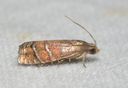
Cydia toreuta, commonly known as the eastern pine seedworm , is a small tortricid moth native to North America. The is a seed , with larvae feeding exclusively on the seeds of red pine (Pinus resinosa) and jack pine (Pinus banksiana). It is considered a minor forest pest that reduces seed viability in conifer stands.
Pronunciation
How to pronounce Cydia toreuta: //ˈsɪdiə tɔːˈruːtə//
These audio files are automatically generated. While they are not always 100% accurate, they are a good starting point.
Identification
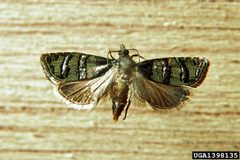
Distinguished from other Cydia by association with Pinus resinosa and Pinus banksiana seeds. Cydia pomonella (codling moth) is larger and associated with apple and pear. Cydia latiferreana (filbertworm) feeds on hazelnuts and oaks. Definitive identification requires examination of genitalia or molecular methods.
Images
Appearance
Small with wingspan approximately 13 mm. Typical tortricid with wings folded roof-like over body at rest. Specific coloration and pattern details are not documented in available sources.
Habitat
Coniferous forests dominated by red pine and jack pine. Occurs in natural pine stands and plantations where trees are present.
Distribution
North America. Documented from Vermont and other parts of the United States. Range corresponds with distribution of Pinus resinosa and Pinus banksiana.
Diet
Larvae feed on seeds of Pinus resinosa (red pine) and Pinus banksiana (jack pine). No other are documented.
Host Associations
- Pinus resinosa - larval food plantred pine
- Pinus banksiana - larval food plantjack pine
Ecological Role
Seed that reduces conifer seed viability. Impact on forest is generally minor due to sporadic distribution and partial seed consumption.
Human Relevance
Minor forestry pest. Larval feeding reduces seed collection yields for reforestation programs. Not known to cause significant economic damage to timber production.
Similar Taxa
- Cydia pomonellaSimilar but larger, with wingspan 15-22 mm, and feeds on apple and pear rather than pine seeds
- Cydia latiferreanaSimilar but feeds on hazelnuts and acorns; different association and geographic distribution
More Details
Taxonomic history
Originally described as Penthina toreuta by Grote in 1873, later transferred to Cydia.
Sources and further reading
- BugGuide
- Wikipedia
- GBIF taxonomy match
- iNaturalist taxon
- NCBI Taxonomy
- Catalogue of Life
- Blacklighting at the Bohart: They Saw the Light | Bug Squad
- What Will You See at Bohart Museum Open House | Bug Squad
- Like a Moth to a Flame: Moth Night at Bohart Museum of Entomology | Bug Squad
- Oh, What a (Moth) Night! | Bug Squad
- Line Trapping: A Promising Method for More Accurate Pest Monitoring
- Odorant Receptor Gene in Codling Moth Also Affects Egg Production