
Eucopina tocullionana
(Heinrich, 1920)
white pine cone borer, White Pine Coneborer Moth
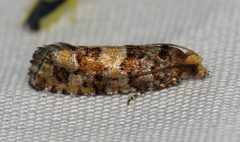
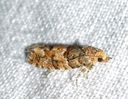
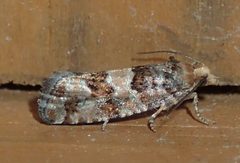
A small tortricid specialized on pine cones. are active in spring and summer, with larvae developing within cones of white pine and Virginia pine. The is restricted to eastern North America, primarily in Appalachian and Great Lakes regions.
Pronunciation
How to pronounce Eucopina tocullionana: /juːkoʊˈpaɪnə ˌtoʊkʌliˈoʊnænə/
These audio files are automatically generated. While they are not always 100% accurate, they are a good starting point.
Images
Habitat
Associated with forests containing pine , particularly Pinus strobus (eastern white pine) and Pinus virginiana (Virginia pine). Larvae develop within pine cones.
Distribution
North America: from Minnesota east to Quebec, south through the Appalachian Mountains to northern Georgia.
Seasonality
: early May to August. Larvae: mid-June to late August. One per year.
Diet
Larvae feed within cones of Pinus strobus and Pinus virginiana. feeding habits unknown.
Host Associations
- Pinus strobus - larval develops within cones
- Pinus virginiana - larval develops within cones
Life Cycle
One per year. Larval development occurs within pine cones from mid-June through August. and timing not specified in sources.
Ecological Role
Seed : larval feeding within pine cones reduces seed production of trees.
Human Relevance
May impact seed production in white pine stands, potentially affecting forestry and restoration efforts. Not a major economic pest.
Similar Taxa
- Eucopina siskiyouanaSimilar cone-boring habit on pines; distinguished by geographic range (western North America vs. eastern) and associations
- Eucosma spp.Formerly classified in this ; other Eucosma may overlap in but differ in use and genitalia