
Eucopina siskiyouana
(Kearfott, 1907)
Fir Coneborer Moth
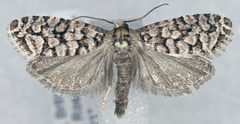
Eucopina siskiyouana, commonly known as the Fir Coneborer , is a of tortricid moth in the tribe Eucosmini. First described by Kearfott in 1907, this species is associated with coniferous , particularly fir trees. The suggests larval feeding within cones, a trait shared with related Eucopina species. It occurs in western North America.
Pronunciation
How to pronounce Eucopina siskiyouana: /ˌjuːkoʊˈpaɪnə ˌsɪskɪˈjuːənə/
These audio files are automatically generated. While they are not always 100% accurate, they are a good starting point.
Identification
Distinguished from other Eucopina by genitalia ; external features alone are insufficient for reliable identification. Forewing patterns are generally mottled gray-brown with variable markings typical of the . Specimens require dissection or molecular analysis for definitive identification.
Images
Habitat
Coniferous forests, particularly those containing fir (Abies) . Associated with mature to old-growth forest stands where trees produce cones.
Distribution
Western North America; recorded from the Siskiyou Mountains region of California and Oregon, with range extending through suitable coniferous forest in the Pacific Northwest and montane western United States.
Seasonality
have been recorded from June to August based on collection data. Larval activity within cones likely occurs during cone development in spring and early summer.
Diet
Larvae feed within developing cones of fir trees (Abies spp.), consuming seeds and cone tissues.
Host Associations
- Abies - Fir ; larvae bore into and feed within developing cones
Life Cycle
Larvae develop within fir cones, feeding on seeds and internal tissues. occurs within the cone or in surrounding debris. emerge in summer. Specific details on voltinism and stage are not documented.
Ecological Role
As a seed , larvae reduce fir seed production in affected cones. impacts on forest are generally localized and minor.
Human Relevance
Minor forestry concern; cone damage reduces seed collection for reforestation efforts in some areas. Not considered a significant economic pest.
Similar Taxa
- Eucopina tocullionanaSimilar size, coloration, and cone-boring habit; requires genitalia examination for separation
- Eucopina bobanaOverlapping western North American range and fir association; distinguished by male genitalia
More Details
Etymology
Specific epithet 'siskiyouana' refers to the Siskiyou Mountains of California and Oregon, the type locality region.