
Vitula
Ragonot, 1887
Species Guides
7- Vitula aegerella
- Vitula broweri(Brower's Vitula Moth)
- Vitula edmandsii(Dried Fruit Moth)
- Vitula insula
- Vitula pinei
- Vitula serratilineella(Beehive Honey Moth)
- Vitula setonella
Vitula is a of snout moths in the Pyralidae, Phycitinae, described by Émile Louis Ragonot in 1887. The genus contains approximately 12 described distributed across North America and Europe. The best-studied species, Vitula edmandsae (formerly V. edmandsae serratilineella), is a significant pest of apiculture in western Canada, where larvae infest and products. Males of this species produce sounds during courtship and respond to specific female-produced components.
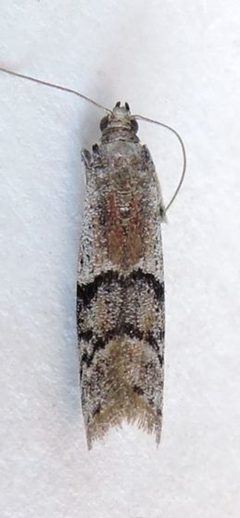
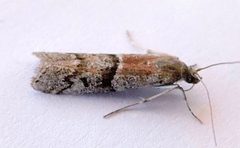
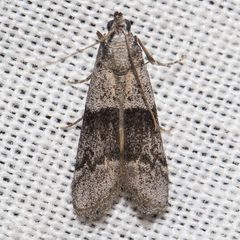
Pronunciation
How to pronounce Vitula: /ˈvɪt.jʊ.lə/
These audio files are automatically generated. While they are not always 100% accurate, they are a good starting point.
Identification
As a -level record, specific identification characters are not applicable. within Vitula are small to medium-sized pyralid moths with the characteristic snout-like labial palps typical of the . Accurate identification to species requires examination of genitalia and reference to original descriptions.
Images
Distribution
North America (including western Canada, Vermont, and other regions of the United States) and Europe (Denmark, Norway, Sweden). Distribution varies by ; some species have restricted ranges while others are widespread.
Seasonality
Peak activity of V. edmandsae occurs in May indoors ( storage facilities) and July outdoors in the Okanagan and Fraser valleys of British Columbia. Seasonality for other is not well documented.
Host Associations
- beeswax - larval food sourceSpecific to V. edmandsae; larvae infest wax comb and products
- beehive equipment - / siteSpecific to V. edmandsae; occurs in storage facilities
Behavior
Males of V. edmandsae produce sounds during courtship. Males are attracted to female-produced blends, with strongest response to (Z,E)-9,12-tetradecadien-1-ol alone or combined with (Z)-11-hexadecen-1-ol. Trap capture rates are higher near beehives (1 m) than at greater distances (4.5 m).
Ecological Role
V. edmandsae acts as a pest in managed , damaging products and equipment. It is one of three wax-attacking affecting western Canadian apiculture.
Human Relevance
V. edmandsae is a serious pest of products in western Canada, causing economic damage to operations. -based monitoring systems have been developed and field-tested for this , demonstrating feasibility for programs.
Similar Taxa
- Achroia grisellaAlso a wax-attacking pest of products in the Fraser Valley, British Columbia; distinguished by geographic restriction and different chemistry
- Plodia interpunctellaThird wax-attacking affecting western Canadian apiculture; distinguished by different and systems
More Details
Taxonomic Note
V. edmandsae serratilineella Ragonot is now treated as V. edmandsae (Packard, 1864). The was originally described as Galleria edmandsii Packard, 1864.
Pheromone Chemistry
The female of V. edmandsae contains three components: (Z,E)-9,12-tetradecadien-1-ol, (Z)-9-tetradecen-1-ol, and (Z)-11-hexadecen-1-ol. Field trials showed that binary combinations of the first and third components were most attractive to males.