
Vitula serratilineella
Ragonot, 1887
Beehive Honey Moth, driedfruit moth, bumble bee wax moth
Vitula serratilineella, commonly known as the beehive honey or driedfruit moth, is a wax moth native to western North America. It is a significant pest of operations, infesting products and wax. The species was described by Ragonot in 1887 and has been the subject of -based monitoring research. Females produce a specific three-component pheromone blend that has been successfully used in field trapping programs.
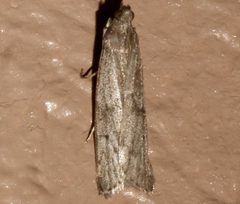
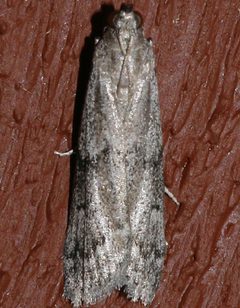
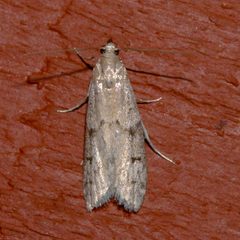
Pronunciation
How to pronounce Vitula serratilineella: /vɪˈtuːlə ˌsɛrətɪlɪˈnɛlə/
These audio files are automatically generated. While they are not always 100% accurate, they are a good starting point.
Identification
Closely related to Vitula edmandsii (American wax ) of eastern North America; historically treated as either a or full . Distinguished from other wax moths in western Canada (Achroia grisella and Plodia interpunctella) by its broader geographic distribution throughout western Canada rather than being restricted to the Fraser Valley of British Columbia. Specific morphological diagnostic features are not documented in available sources.
Images
Habitat
Western Canada, particularly in equipment storage facilities and environments. Occurs in proximity to hives, with higher trap captures observed at 1.0 m from hives compared to 4.5 m. Present in both indoor (warehouse) and outdoor settings.
Distribution
Western North America; throughout western Canada including Alberta and Saskatchewan. Present in British Columbia's Fraser Valley and Okanagan Valley. Distribution records also indicate presence in Denmark, Norway, and Sweden, though these may represent introductions or misidentifications requiring verification.
Seasonality
activity peaks outdoors during July in both the Fraser and Okanagan valleys of British Columbia. Indoor trapping peaks during May in the Okanagan Valley, with negligible indoor captures in the Fraser Valley throughout the trapping period.
Host Associations
- honey bee products - infestsspecifically wax and stored products
- bee hives - occurs in close proximity to active hives and stored equipment
Behavior
Males are attracted to synthetic lures in field conditions. Trap proximity to hives significantly affects capture rates, with detected more frequently near hive equipment. Both indoor and outdoor trapping demonstrate seasonal activity patterns.
Ecological Role
Pest of apiculture; damages stored products and wax, causing economic losses to operations in western Canada.
Human Relevance
Economic pest of the industry. Subject of -based monitoring research with demonstrated feasibility for detection and potential control programs. affect stored products and equipment.
Similar Taxa
- Vitula edmandsiiEastern North American counterpart; historically treated as (as V. edmandsae serratilineella) or closely related ; requires taxonomic clarification
- Achroia grisellaAnother wax pest in western Canada, but restricted to Fraser Valley of British Columbia unlike the broader western Canadian distribution of V. serratilineella
- Plodia interpunctellaIndian meal moth, also a stored product pest in western Canadian , but similarly restricted to Fraser Valley compared to the wider range of V. serratilineella
More Details
Pheromone chemistry
Female-produced consists of three components: (Z,E)-9,12-tetradecadien-1-ol, (Z)-9-tetradecen-1-ol, and (Z)-11-hexadecen-1-ol. Field trials demonstrated that (Z,E)-9,12-tetradecadien-1-ol alone or in binary combination with (Z)-11-hexadecen-1-ol was significantly more attractive to males than other blend combinations.
Taxonomic note
The has been treated in literature under the name Vitula edmandsae serratilineella (as a of V. edmandsii/edmandsae) or as the full species V. serratilineella. The GBIF and Catalogue of Life recognize V. serratilineella Ragonot, 1887 as the accepted name.