
Melitara dentata
(Grote, 1876)
Blue Cactus Borer, North American Cactus Moth
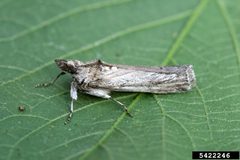
A pyralid native to western North America, ranging from Alberta to southern Arizona and central Texas, with introduced in Hawaii. have a wingspan of 32–50 mm. The has one per year and is specialized on Opuntia cacti as larval .
Pronunciation
How to pronounce Melitara dentata: //mɛ.lɪˈtɑː.rə dɛnˈtɑː.tə//
These audio files are automatically generated. While they are not always 100% accurate, they are a good starting point.
Identification
Wingspan 32–50 mm. Distinguished from related cactus-feeding pyralids by specific associations and geographic range. are and attracted to ultraviolet light.
Images
Habitat
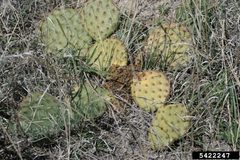
Associated with Opuntia cactus in arid and semi-arid regions of western North America.
Distribution
Native to western North America: widespread from Alberta and Saskatchewan (Canada) through the western United States to southern Arizona and central Texas. Introduced and established in Hawaii.
Seasonality
One per year; activity period not explicitly documented but likely corresponds to regional cactus flowering and growing seasons.
Diet
Larvae feed internally on Opuntia cactus , including Opuntia fragilis, Opuntia macrorhiza, Opuntia phaeacantha, and Opuntia polyacantha.
Host Associations
- Opuntia fragilis - larval new record
- Opuntia macrorhiza - larval
- Opuntia phaeacantha - larval
- Opuntia polyacantha - larval
Life Cycle
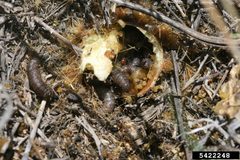
One per year. Larvae feed within cactus tissues. occurs within silk cases constructed by larvae.
Behavior
Larvae are internal feeders on cactus stems and pads. are and attracted to ultraviolet light sources.
Ecological Role
Specialized herbivore of Opuntia cacti; contributes to cactus and may serve as prey for and other natural enemies.
Human Relevance
Potential agent for Opuntia ; introduced to Hawaii, possibly for cactus control purposes.
Similar Taxa
- Melitara prodenialisAlso feeds on Opuntia; distinguished by distribution and specific associations
- Cactoblastis cactorumAnother cactus-feeding pyralid, but in Phycitinae; introduced for of Opuntia