
Melitara
Walker, 1863
Pricklypear Borers
Species Guides
7- Melitara apicigrammella
- Melitara dentata(Blue Cactus Borer)
- Melitara doddalis
- Melitara junctolineella
- Melitara prodenialis(Eastern Cactus-boring Moth)
- Melitara subumbrella
- Melitara texana(Texas snout moth)
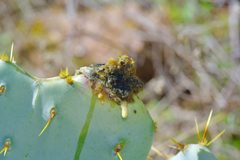
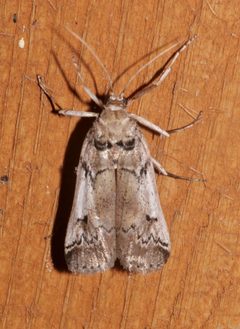
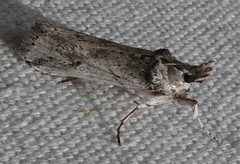
Melitara is a of snout moths (Pyralidae: Phycitinae) established by Francis Walker in 1863. in this genus are herbivores of cacti, particularly Opuntia species, with larvae that bore into cactus pads and stems. The genus is taxonomically contentious, with some sources treating it as a synonym of Zophodia while others retain it as valid. Melitara species serve as for in the Braconidae, and have been studied in the context of of cacti and as potential competitors to the invasive South American cactus moth Cactoblastis cactorum.
Pronunciation
How to pronounce Melitara: /mɛlɪˈtɑːrə/
These audio files are automatically generated. While they are not always 100% accurate, they are a good starting point.
Identification
Distinguished from related Phycitinae by association with cactus and larval boring . are snout moths with typical pyralid . -level identification requires examination of genitalia and wing pattern details. The genus is morphologically similar to Zophodia, contributing to ongoing taxonomic debate about their separation.
Images
Habitat
Associated with cactus , particularly Opuntia (prickly pear cacti). Documented in cultivated Opuntia ficus-indica fields in Mexico and montane dryland in New Mexico, USA.
Distribution
North America, including the United States (Florida, New Mexico, Texas) and Mexico. Melitara prodenialis shows a documented phylogeographic discontinuity between Florida panhandle and peninsula .
Diet
Larvae feed on cactus tissue, boring into pads and stems of Opuntia .
Host Associations
- Opuntia ficus-indica - larval plantcultivated fields
- Opuntia - larval plantprickly pear cacti
- Apanteles mimoristae - gregarious endoparasitoid
- Iconella melitaraevora - gregarious of Melitara subumbrella
Life Cycle
Complete with , larval, pupal, and stages. Larvae are cactus-borers that feed internally within plant tissue.
Behavior
Larval boring into cactus pads and stems. are and attracted to light.
Ecological Role
herbivore of native and cultivated cacti. Serves as for native . Potential agent for cacti; also part of the native cactus-feeding that may interact with the invasive Cactoblastis cactorum.
Human Relevance
Studied for potential use in of cacti. Melitara dentata (North American cactus moth or Blue Cactus Borer) has been evaluated for control of weedy Opuntia . Species serve as alternative for that might attack the invasive cactus moth Cactoblastis cactorum.
Similar Taxa
- ZophodiaTaxonomically contentious relationship; some sources treat Melitara as a synonym of Zophodia based on morphological similarities, while others maintain separate generic status
- Cactoblastis cactorumSouth American cactus moth with similar and use; distinguished by geographic origin and different associations
Sources and further reading
- BugGuide
- Wikipedia
- GBIF taxonomy match
- iNaturalist taxon
- NCBI Taxonomy
- Catalogue of Life
- New Host Record for the Blue Cactus Borer (Melitara dentata Grote)
- Redescription of Apanteles mimoristae (Hymenoptera, Braconidae), a parasitoid of the native pyralid cactus moth Melitara cf. nephelepasa in central Mexico
- Phylogeographic evidence for a Florida panhandle–peninsula discontinuity in the distribution of Melitara prodenialis Walker (Lepidoptera: Pyralidae), a native cactus‐boring moth
- A new species of Iconella (Mason, 1981) (Hymenoptera, Braconidae, Microgastrinae), a parasitoid of Melitara subumbrella (Dyar, 1925) cactus moth larvae from New Mexico with biological notes and an updated key to the American Iconella species
- Figure 2 from: Morrison CR, Armstrong WR, Plowes RM, Gilbert LE, Fernández-Triana JL (2025) A new species of Iconella (Mason, 1981) (Hymenoptera, Braconidae, Microgastrinae), a parasitoid of Melitara subumbrella (Dyar, 1925) cactus moth larvae from New Mexico with biological notes and an updated key to the American Iconella species. Journal of Hymenoptera Research 98: 483-498. https://doi.org/10.3897/jhr.98.151036
- Figure 3 from: Morrison CR, Armstrong WR, Plowes RM, Gilbert LE, Fernández-Triana JL (2025) A new species of Iconella (Mason, 1981) (Hymenoptera, Braconidae, Microgastrinae), a parasitoid of Melitara subumbrella (Dyar, 1925) cactus moth larvae from New Mexico with biological notes and an updated key to the American Iconella species. Journal of Hymenoptera Research 98: 483-498. https://doi.org/10.3897/jhr.98.151036
- Figure 10 from: Villegas-Luján R, Plowes R, Gilbert LE, Rodríguez JC, Canales-del-Castillo R, Gallegos-Morales G, España-Luna MP, Fernández-Triana J, Sanchez-Peña SR (2024) Redescription of Apanteles mimoristae (Hymenoptera, Braconidae), a parasitoid of the native pyralid cactus moth Melitara cf. nephelepasa in central Mexico. Journal of Hymenoptera Research 97: 207-228. https://doi.org/10.3897/jhr.97.117514
- Figure 4 from: Villegas-Luján R, Plowes R, Gilbert LE, Rodríguez JC, Canales-del-Castillo R, Gallegos-Morales G, España-Luna MP, Fernández-Triana J, Sanchez-Peña SR (2024) Redescription of Apanteles mimoristae (Hymenoptera, Braconidae), a parasitoid of the native pyralid cactus moth Melitara cf. nephelepasa in central Mexico. Journal of Hymenoptera Research 97: 207-228. https://doi.org/10.3897/jhr.97.117514
- Figure 1 from: Morrison CR, Armstrong WR, Plowes RM, Gilbert LE, Fernández-Triana JL (2025) A new species of Iconella (Mason, 1981) (Hymenoptera, Braconidae, Microgastrinae), a parasitoid of Melitara subumbrella (Dyar, 1925) cactus moth larvae from New Mexico with biological notes and an updated key to the American Iconella species. Journal of Hymenoptera Research 98: 483-498. https://doi.org/10.3897/jhr.98.151036
- Supplementary material 1 from: Morrison CR, Armstrong WR, Plowes RM, Gilbert LE, Fernández-Triana JL (2025) A new species of Iconella (Mason, 1981) (Hymenoptera, Braconidae, Microgastrinae), a parasitoid of Melitara subumbrella (Dyar, 1925) cactus moth larvae from New Mexico with biological notes and an updated key to the American Iconella species. Journal of Hymenoptera Research 98: 483-498. https://doi.org/10.3897/jhr.98.151036
- Figure 1 from: Villegas-Luján R, Plowes R, Gilbert LE, Rodríguez JC, Canales-del-Castillo R, Gallegos-Morales G, España-Luna MP, Fernández-Triana J, Sanchez-Peña SR (2024) Redescription of Apanteles mimoristae (Hymenoptera, Braconidae), a parasitoid of the native pyralid cactus moth Melitara cf. nephelepasa in central Mexico. Journal of Hymenoptera Research 97: 207-228. https://doi.org/10.3897/jhr.97.117514
- Figure 9 from: Villegas-Luján R, Plowes R, Gilbert LE, Rodríguez JC, Canales-del-Castillo R, Gallegos-Morales G, España-Luna MP, Fernández-Triana J, Sanchez-Peña SR (2024) Redescription of Apanteles mimoristae (Hymenoptera, Braconidae), a parasitoid of the native pyralid cactus moth Melitara cf. nephelepasa in central Mexico. Journal of Hymenoptera Research 97: 207-228. https://doi.org/10.3897/jhr.97.117514
- Figure 2 from: Villegas-Luján R, Plowes R, Gilbert LE, Rodríguez JC, Canales-del-Castillo R, Gallegos-Morales G, España-Luna MP, Fernández-Triana J, Sanchez-Peña SR (2024) Redescription of Apanteles mimoristae (Hymenoptera, Braconidae), a parasitoid of the native pyralid cactus moth Melitara cf. nephelepasa in central Mexico. Journal of Hymenoptera Research 97: 207-228. https://doi.org/10.3897/jhr.97.117514
- Figure 6 from: Villegas-Luján R, Plowes R, Gilbert LE, Rodríguez JC, Canales-del-Castillo R, Gallegos-Morales G, España-Luna MP, Fernández-Triana J, Sanchez-Peña SR (2024) Redescription of Apanteles mimoristae (Hymenoptera, Braconidae), a parasitoid of the native pyralid cactus moth Melitara cf. nephelepasa in central Mexico. Journal of Hymenoptera Research 97: 207-228. https://doi.org/10.3897/jhr.97.117514
- Figure 8 from: Villegas-Luján R, Plowes R, Gilbert LE, Rodríguez JC, Canales-del-Castillo R, Gallegos-Morales G, España-Luna MP, Fernández-Triana J, Sanchez-Peña SR (2024) Redescription of Apanteles mimoristae (Hymenoptera, Braconidae), a parasitoid of the native pyralid cactus moth Melitara cf. nephelepasa in central Mexico. Journal of Hymenoptera Research 97: 207-228. https://doi.org/10.3897/jhr.97.117514