
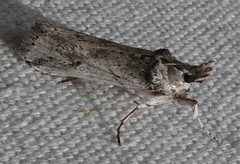
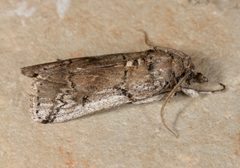
Melitara prodenialis
Walker, 1863
Eastern Cactus-boring Moth
Melitara prodenialis is a cactus-boring in the Pyralidae, native to the Atlantic coastal plain of North America from New York to Florida and west to Oklahoma and Texas. It has been introduced to Hawaii and is listed as a of special concern in Connecticut. The species exhibits a documented phylogeographic discontinuity between Florida panhandle and peninsula , correlated with climatic and environmental factors.
Pronunciation
How to pronounce Melitara prodenialis: /ˌmɛlɪˈtɑːrə ˌproʊdəˈnaɪəlɪs/
These audio files are automatically generated. While they are not always 100% accurate, they are a good starting point.
Identification
Larvae are distinguished by their specialized habit of boring into Opuntia cladodes. are on wing during two periods annually in most of the range: June to July and September to October.
Images
Habitat
Associated with Opuntia cactus stands in coastal plain environments. Larvae inhabit the interior of cactus pads, creating tunnels through cladodes.
Distribution
Native range extends from south-eastern New York to Florida along the Atlantic coastal plain, west to eastern Oklahoma and north-central and south-eastern Texas. Introduced and established in Hawaii.
Seasonality
Two per year throughout most of the range; three generations in Florida. periods in Arkansas occur June–July and September–October.
Diet
Larvae feed on Opuntia cladodes.
Host Associations
- Opuntia - larval food plantlarvae bore into cladodes
Life Cycle
Two per year in most of range; three generations in Florida.
Behavior
Larvae bore into cactus cladodes, creating internal tunnels. This specialized feeding habit is the source of the 'cactus-boring '.
Human Relevance
Listed as a of special concern in Connecticut. Subject of phylogeographic research due to its distribution pattern in the southeastern U.S. coastal plain.
Similar Taxa
- Melitara dentataAlso a cactus-feeding in the same ; geographic range and specific associations may differ
- Other PhycitinaeMany are externally similar small ; identification requires examination of larval and boring
More Details
Phylogeographic structure
Research has documented significant genetic divergence between Florida panhandle and peninsula , correlated with current and historic climate patterns. Peninsula populations show evidence of more recent expansion compared to panhandle populations, consistent with response to Pleistocene climatic cycles.