
Achroia
Hübner, 1819
Species Guides
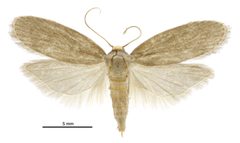
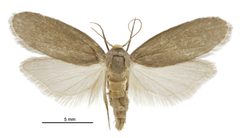
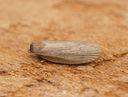
1- Achroia grisella(Lesser Wax Moth)
Achroia is a of small in the snout moth Pyralidae, belonging to the tribe Galleriini within Galleriinae. The genus contains one unequivocally recognized , Achroia grisella (lesser wax moth), with several other named species considered of doubtful validity. These moths are primarily known as pests of colonies, where larvae consume wax, pollen, and honey. The genus is closely related to Galleria, which contains the greater wax moth.
Pronunciation
How to pronounce Achroia: //aˈkrɔɪ.a//
These audio files are automatically generated. While they are not always 100% accurate, they are a good starting point.
Identification
are small, nondescript that can be distinguished from the greater wax moth (Galleria mellonella) by their smaller size. Achroia grisella is notably smaller than Galleria mellonella, with the latter being more destructive to colonies. The two are the primary wax moths associated with hives, and identification to genus level in the field typically relies on size comparison and association with material. Accurate identification within Achroia is complicated by taxonomic uncertainty, with most names other than A. grisella considered doubtful.
Images
Habitat
Associated with colonies, both managed hives and wild nests. Larvae develop within the hive environment, tunneling through combs. are attracted to hives at night.
Distribution
Records from Denmark (DK), Norway (NO), and Sweden (SE) in GBIF. Achroia grisella has been documented on Guam as a new pest record, indicating wider distribution in association with apiculture. The likely occurs wherever honey bees are kept, though specific distribution data for the genus beyond these records is limited.
Seasonality
females are active at night, entering hives one to three hours after dark and departing shortly before daylight. activity to reach hives for oviposition.
Diet
Larvae consume , pollen, and honey within combs. They tunnel through combs, lining tunnels with silk for protection from housecleaning bees.
Host Associations
- Apis mellifera - pestPrimary ; larvae develop in hives, consuming comb material. typically indicate weak or stressed colonies.
Life Cycle
Females lay in cracks and crevices inside and outside hives. Eggs hatch into larvae that tunnel through combs, consuming wax, pollen, and honey while lining tunnels with protective silk. Larvae grow larger and become more exposed, making them vulnerable to removal by housecleaning bees in strong colonies. occurs within the hive environment or stored comb material.
Behavior
Females exhibit , flying to hives after dark to oviposit. Larvae construct silk-lined tunnels through comb material as a defensive strategy against removal. In strong colonies, larvae are cast out by housecleaning bees; persist primarily in weak or queenless colonies.
Ecological Role
In natural settings, primarily a threat to weak colonies. Strong colonies can control through hygienic . Serves as a natural indicator of colony health problems including queenlessness, , or starvation. Larvae are utilized as fish , animal feed, and as model organisms for scientific research on microbial .
Human Relevance
Pest of apiculture, causing damage to stored comb and weak hives. Beekeepers manage through freezing frames, airtight storage of comb, and use of mothballs. Larvae are commercially raised for fish , animal feed, and scientific research applications. Documented as an pest on Guam, where it was recorded as a new pest in surveys.
Similar Taxa
- Galleria mellonellaGreater wax moth; larger, more destructive in tribe Galleriini. Both are hive pests, but Galleria mellonella is more serious and causes greater damage to colonies.
More Details
Taxonomic Uncertainty
The Achroia contains multiple named of doubtful validity. Only Achroia grisella is unequivocally recognized; other names (A. aluearia, A. alvea, A. anticella, A. cinereola, A. ifranella, A. innotata, A. obscurevittella) are considered doubtful. This taxonomic instability complicates identification and ecological studies.
Invasive Potential
Documented as a new pest record on Guam in 2019, where it was discovered during National Survey protocols. Its introduction to Guam illustrates the risk of pest spread through apiculture and commerce.