
Galleriini
Genus Guides
2Galleriini is a tribe of snout moths within the Galleriinae of the Pyralidae. The tribe contains approximately eight recognized , including the economically significant genus Galleria, whose larvae are known as waxworms. Members of this tribe are primarily associated with stored products, honeycombs, and detritus-based .
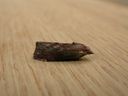
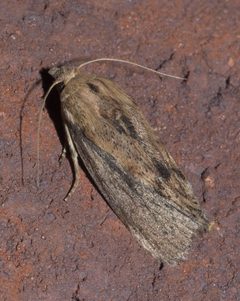
Pronunciation
How to pronounce Galleriini: //ɡæˌlɛriˈaɪni//
These audio files are automatically generated. While they are not always 100% accurate, they are a good starting point.
Images
Habitat
Associated with stored products, honeycombs, and detritus; some inhabit beehives and feed on wax, pollen, and hive debris.
Distribution
distribution, with occurring across multiple continents; individual show varying geographic ranges.
Diet
Larvae of some , notably Galleria, feed on , pollen, and hive debris; other members likely consume stored organic matter and detritus.
Host Associations
- Apis - larvae feed on and hive debris in honeybee coloniesprimarily Galleria mellonella, the greater wax moth
Ecological Role
Larvae function as and decomposers in beehives and stored product environments; some are significant pests of honeybee colonies and stored goods.
Human Relevance
Galleria mellonella (greater wax moth) is a major pest of honeybee colonies worldwide, causing damage to wax comb and stored honey; larvae are also widely used as live food for reptiles, birds, and fish, and as a model organism in biomedical research.
Similar Taxa
- Tegulinialso within Galleriinae, but differs in larval and morphological characters; Tegulini larvae are not primarily wax-feeders
More Details
Research utility
Galleria mellonella larvae have become an important model organism for studying bacterial and fungal , as their immune system shares functional similarities with mammals and they can be maintained at human body temperature.