
Diaphania costata
(Fabricius, 1794)
Orange-shouldered Sherbet Moth, White Palpita Moth
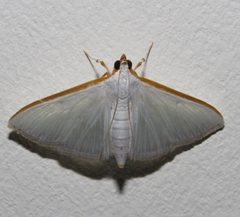
Diaphania costata is a small in the Crambidae, first described by Johan Christian Fabricius in 1794. It is notable for its translucent white wings with a distinctive gold line along the leading edge of the forewing. The has an exceptionally wide distribution, occurring naturally across the Indomalayan realm and Europe, with introduced established in Mexico and Texas. are active and can be found year-round in suitable climates, with wingspans under 20 mm.
Pronunciation
How to pronounce Diaphania costata: /daɪəˈfeɪniə kɒˈstɑːtə/
These audio files are automatically generated. While they are not always 100% accurate, they are a good starting point.
Identification
The combination of small size (< 20 mm wingspan), translucent white wings, and the distinctive gold or orange line along the forewing separates this from most other Crambidae. The 'orange-shouldered' refers to this gold marking. Similar Diaphania species may lack this distinct costal line or show different wing patterns; examination of genitalia may be required for definitive identification in regions where multiple Diaphania species occur.
Images
Habitat
Found in diverse environments across its broad range, including tropical and subtropical regions of the Indomalayan realm, temperate Europe, and introduced in the southern United States (Texas) and Mexico. Specific microhabitat preferences are poorly documented but are frequently encountered in areas with flowering vegetation.
Distribution
Native range includes the Indomalayan realm (Southeast Asia, Indian subcontinent) and Europe. Introduced established in Mexico and Texas, United States, likely through accidental human transport. The disjunct distribution between Old World and New World populations suggests human-mediated introduction rather than natural range expansion.
Seasonality
activity patterns vary by region. In tropical and subtropical portions of its range, adults may be active year-round. In temperate regions, activity is likely concentrated during warmer months, though specific data are limited.
Human Relevance
No significant economic impact documented. The Texas and Mexico may represent an accidental introduction through human activity, though the does not appear to be a notable agricultural pest. Occasionally encountered by collectors and photographers due to its distinctive wing pattern.
Similar Taxa
- Diaphania hyalinataAnother small Diaphania with translucent wings; D. costata distinguished by gold forewing line
- Diaphania nitidalisSimilar size and general appearance; D. costata distinguished by costal line coloration and wing pattern
- Palpita spp.Formerly or erroneously associated with the 'white palpita ' ; true Palpita belong to a different within Crambidae
Misconceptions
More Details
Taxonomic note
Authority sometimes cited as Fabricius, 1775 in some sources, but 1794 is the correct date for the original description.
Nomenclatural history
Has been placed in Stemorrhages in some treatments; currently accepted as Diaphania costata.
Sources and further reading
- BugGuide
- Wikipedia
- GBIF taxonomy match
- iNaturalist taxon
- NCBI Taxonomy
- Fran Keller: Entomologist, Teacher, Artist, Author | Bug Squad
- How One Entomologist Became a Detective of 'Pest Mysteries'
- Bug Eric: New Mexico Dragonfly Blitz - Day 3
- Fascinating Invertebrates ~ Bring on the leeches! - Buglife Blog - Buglife
- Bizarre, beautiful extremes | Beetles In The Bush