
Laniifera cyclades
Druce, 1895
Cactus Moth, Prickly Pear Moth
Laniifera cyclades is a snout moth in the Crambidae and the sole member of its . It is native to Mexico and the southwestern United States. The is notable for its specialized diet on prickly pear cactuses (Opuntia), which has led to its introduction as a agent in regions where these cactuses are . are active from July to September and have a wingspan of approximately 40 mm.
Pronunciation
How to pronounce Laniifera cyclades: //læˈnɪ.ɪˌfɛ.rə ˈsɪ.kleɪˌdiːz//
These audio files are automatically generated. While they are not always 100% accurate, they are a good starting point.
Identification
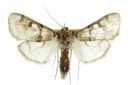
Distinguished from similar Crambidae by the combination of fawn forewings with black base, the distinctive black and white wing markings including the round and elongate white spots in the forewing , and pearly white hindwings with fawn marginal line. The submarginal zigzag line is particularly characteristic. The is the only member of its , reducing confusion with congenerics.
Images
Appearance
have a wingspan of approximately 40 mm. The forewings are fawn-colored with a black base, clouded with blackish gray from the middle nearly to the outer margin. A narrow waved black line, edged with grayish white on the inner side, crosses the wing before the middle. A submarginal zigzag grayish-black line, edged with white on the outer side, extends from the costal margin near the apex to the inner margin near the anal angle. The forewings also bear a round white spot in the and an elongate spot at the end of the cell, both edged with black. The hindwings are pearly white with a fawn marginal line.
Habitat
Associated with supporting Opuntia , including arid and semi-arid regions, grasslands, and scrublands. Found in both natural and disturbed environments where prickly pear cactuses occur.
Distribution
Native to Mexico (including Mexico City and Durango City) and the southwestern United States (Arizona and Texas). Introduced established in Australia, South Africa, and other regions for of Opuntia .
Seasonality
are active from July to September. The period corresponds to the warm season in its native range.
Diet
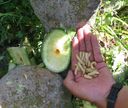
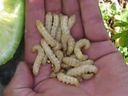
Caterpillars feed exclusively on Opuntia (prickly pear cactuses), consuming the cladodes (pads) and fruits. likely do not feed, or feeding habits are unrecorded.
Host Associations
- Opuntia - larval plantPrickly pear cactuses; sole known
Life Cycle
Complete with , larva, pupa, and stages. Larvae are caterpillars that feed on Opuntia. Specific details on site and number of per year are not documented.
Behavior
Larvae feed gregariously on Opuntia cladodes, tunneling into the pads and causing significant damage. This feeding has been exploited for purposes.
Ecological Role
Herbivore specialized on Opuntia cactuses. Acts as a control agent for prickly pear cactuses in native and introduced ranges. Serves as prey for and .
Human Relevance
Considered a pest in its native range where Opuntia is cultivated or valued. Deliberately introduced to Australia in 1925 and other regions as a agent against Opuntia stricta and related , contributing to successful suppression of these weeds. The introduction to Australia is a classic case study in biological control.
Similar Taxa
- Other Crambidae in SpilomelinaeSimilar body plan and size, but distinguished by the unique wing pattern of L. cyclades including the distinctive spots and submarginal zigzag line, and by its exclusive association with Opuntia.
More Details
Biological Control History
Laniifera cyclades was introduced to Queensland, Australia in 1925 as part of a campaign against prickly pear cactuses that had overrun millions of hectares. It was one of several insects released, including the more famous Cactoblastis cactorum. While Cactoblastis is often credited with the major success, L. cyclades contributed to the overall suppression. The was also introduced to South Africa and other regions with similar invasive cactus problems.