
Laniifera
Hampson, 1899
Species Guides
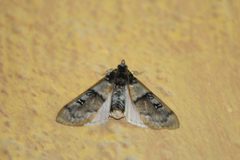
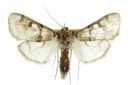
1- Laniifera cyclades(Cactus Moth)
Laniifera is a of snout moths ( Crambidae, Spilomelinae) containing two : L. cyclades and L. rawlinsi. The genus was erected by George Hampson in 1899 with Pachynoa cyclades Druce, 1895 as type species. The caterpillars of L. cyclades are specialized feeders on Opuntia cacti and are recognized as pests of commercial prickly pear .
Pronunciation
How to pronounce Laniifera: //ˌlæniˈɪfərə//
These audio files are automatically generated. While they are not always 100% accurate, they are a good starting point.
Identification
Laniifera can be distinguished from related crambid by their wing venation and genitalia . L. cyclades and L. rawlinsi are separated by differences in wing pattern and male genitalia structure; L. rawlinsi was described in 2020 based on specimens from the Dominican Republic. are medium-sized crambid with relatively broad wings compared to some related genera.
Images
Habitat
Associated with arid and semi-arid regions supporting Opuntia cacti, including desert scrub, thorn forest, and cultivated cactus plantations. The occurs in ranging from natural desert to agricultural settings where prickly pear is grown commercially.
Distribution
Mexico, southern United States (Arizona, Texas), and the Dominican Republic. L. cyclades is recorded from Mexico, Arizona, Texas, and Florida; L. rawlinsi is known only from the Dominican Republic.
Diet
Larvae of L. cyclades feed on Opuntia (prickly pear cactuses). Diet of L. rawlinsi has not been documented.
Host Associations
- Opuntia - larval food plantprickly pear cactuses; L. cyclades only
Ecological Role
L. cyclades larvae function as herbivores on Opuntia, capable of reaching pest densities in cultivated settings. The may contribute to natural of wild Opuntia in native .
Human Relevance
L. cyclades is considered a pest of commercially grown Opuntia , with larval feeding damaging cactus pads and reducing crop yields. The species is of economic concern to prickly pear farmers in Mexico and the southwestern United States.
Similar Taxa
- PachynoaL. cyclades was originally described in Pachynoa; Laniifera was erected to accommodate with distinct genitalia and wing venation patterns. Both belong to Spilomelinae and may share superficial similarities in appearance.
- Other Spilomelinae generaMany spilomeline crambids are similar in general habitus; precise identification requires examination of genitalia and wing venation characters that distinguish Laniifera.
More Details
Taxonomic history
The was established by Hampson in 1899 based on Pachynoa cyclades Druce, 1895. A second , L. rawlinsi, was described by Hayden in 2020 from the Dominican Republic, representing a significant range extension for the genus.
iNaturalist data discrepancy
The iNaturalist summary incorrectly states the contains only one ; this reflects outdated information predating the 2020 description of L. rawlinsi.