
Saucrobotys
Munroe, 1976
Species Guides
2- Saucrobotys fumoferalis(dusky saucrobotys moth)
- Saucrobotys futilalis(dogbane saucrobotys moth)
Saucrobotys is a of in the Crambidae, established by Munroe in 1976. The genus contains at least two described : Saucrobotys fumoferalis and Saucrobotys futilalis. Larvae of at least one species, S. futilalis (the dogbane webworm), are known to feed on dogbane (Apocynum spp.), sequestering the plant's toxic cardenolides for their own chemical defense.
Pronunciation
How to pronounce Saucrobotys: /saʊ.kroʊˈboʊtɪs/
These audio files are automatically generated. While they are not always 100% accurate, they are a good starting point.
Identification
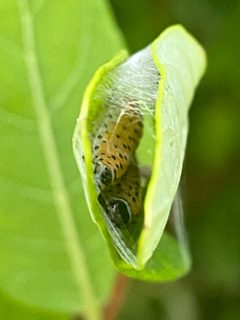
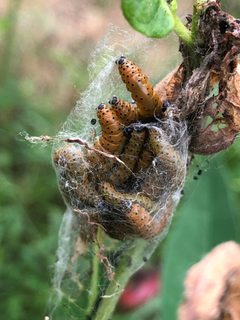
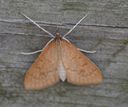
Saucrobotys are small to medium-sized crambid moths. Larvae of S. futilalis construct conspicuous silk tents on dogbane plants, with older caterpillars displaying aposematic orange and black coloration. The can be distinguished from related pyraustine crambids by genitalic characters and wing pattern features described in Munroe's original .
Images
Habitat
Associated with dogbane (Apocynum spp.) growing in meadows, roadsides, and forest edges. The plant occurs in open, sunny .
Distribution
Records from Vermont and other parts of the United States. Distribution appears to align with that of dogbane in North America.
Seasonality
active during summer months. Larval activity observed in midsummer.
Diet
Larvae of Saucrobotys futilalis feed on dogbane (Apocynum cannabinum and A. androsaemifolium), sequestering the plant's cardenolide toxins.
Host Associations
- Apocynum cannabinum - larval common dogbane
- Apocynum androsaemifolium - larval spreading dogbane
Life Cycle
Larvae construct silk tents on plants. Caterpillars undergo ontogenetic color change from cryptic green when young to aposematic orange with black spots as they mature. occurs within the silk webbing.
Behavior
Larvae are gregarious tent-makers. When disturbed, caterpillars regurgitate gut contents containing sequestered cardenolides as a chemical defense against .
Ecological Role
Herbivore that has evolved to exploit the chemical defenses of its plant, converting toxic cardenolides into a deterrent. The conspicuous larval coloration serves as a warning signal to potential predators.
Human Relevance
No significant direct interactions with humans. Occasionally noticed by naturalists and gardeners due to conspicuous larval tents on dogbane plants.
Similar Taxa
- PyraustaRelated pyraustine crambid ; Saucrobotys distinguished by genitalic and specific wing pattern elements
- HerpetogrammaAnother crambid with web-making larvae; differs in plant associations and larval coloration patterns
More Details
Chemical sequestration
Research by Dr. Jacqualine Grant demonstrated that S. futilalis caterpillars actively sequester cardenolides from dogbane and use these compounds for defense against , with aposematic coloration advertising this unpalatability.
Taxonomic history
The was erected by Eugene G. Munroe in 1976 to accommodate previously placed in other pyraustine genera, based on distinctive morphological characters.
Sources and further reading
- BugGuide
- Wikipedia
- GBIF taxonomy match
- iNaturalist taxon
- NCBI Taxonomy
- Catalogue of Life
- Bane of dogbane, the beautiful and the ugly: Dogbane leaf beetle, Chrysochus auaratus, and dogbane webworm, Saucrobotys futilalis — Bug of the Week
- Guest Blogger: Dogbane for Dinner | Beetles In The Bush
- Archive — Bug of the Week