
Saucrobotys fumoferalis
Hulst, 1886
dusky saucrobotys moth
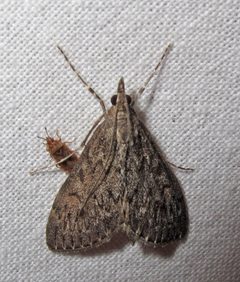
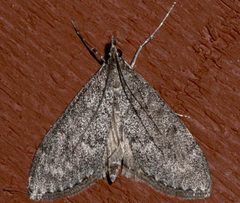
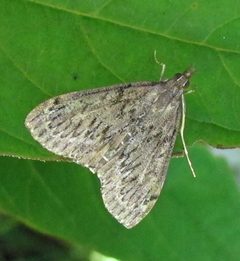
Saucrobotys fumoferalis is a small crambid found across northern and western North America. are active from spring through late summer, with a wingspan of approximately 30 mm. The is notable for its larval association with hickory trees (Carya species), where caterpillars feed on leaves. It inhabits forests, mixed forests, and woodlots across a broad geographic range from the Yukon to California and from Nova Scotia to British Columbia.
Pronunciation
How to pronounce Saucrobotys fumoferalis: /saʊkroʊˈbɒtɪs fuːmoʊfeˈrælɪs/
These audio files are automatically generated. While they are not always 100% accurate, they are a good starting point.
Identification
can be recognized by their small size (wingspan ~30 mm) and relatively plain, dusky coloration typical of many Pyraustinae. The may be confused with other small crambid , but its broad distribution across northern forests and association with hickory provide contextual clues. Larvae are not well described in available sources.
Images
Habitat
forests, mixed forests, and woodlots. The shows affinity for forested environments where hickory trees occur.
Distribution
North America: Nova Scotia west to British Columbia, north to Yukon, and south to Pennsylvania, Illinois, and California. Additional records from Alberta, Manitoba, and Saskatchewan in Canada.
Seasonality
have been recorded on wing from April to September, indicating a relatively long period spanning spring through late summer.
Diet
Larvae feed on Carya (hickories). feeding habits are not documented.
Host Associations
- Carya - larval plantLarvae feed on leaves of hickory
Ecological Role
As a folivore on hickory trees, larvae contribute to nutrient cycling and may serve as prey for forest-dwelling including birds and .
Similar Taxa
- Saucrobotys futilalisSimilar and appearance; also a crambid with webworm larvae, but associated with dogbane (Apocynum) rather than hickory, and with more conspicuous larval coloration (orange with black spots in later instars)
Sources and further reading
- BugGuide
- Wikipedia
- GBIF taxonomy match
- iNaturalist taxon
- NCBI Taxonomy
- Catalogue of Life
- Bane of dogbane, the beautiful and the ugly: Dogbane leaf beetle, Chrysochus auaratus, and dogbane webworm, Saucrobotys futilalis — Bug of the Week
- Guest Blogger: Dogbane for Dinner | Beetles In The Bush
- Archive — Bug of the Week