
Dicymolomia julianalis
Walker, 1859
Julia's Dicymolomia Moth
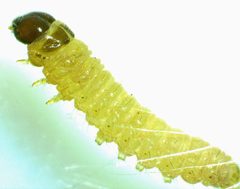
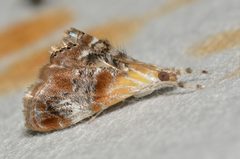
Dicymolomia julianalis is a crambid distributed across eastern North America and Cuba. Larvae exhibit broad dietary flexibility, feeding on seeds of thistles and legumes, as internal borers in cattails and cactus stems, and as on bagworm and larvae. The has been studied for its potential impact on musk thistle seed production.
Pronunciation
How to pronounce Dicymolomia julianalis: //ˌdaɪsɪmoʊˈloʊmiə ˌdʒuːliˈænəlɪs//
These audio files are automatically generated. While they are not always 100% accurate, they are a good starting point.
Images
Habitat
Associated with diverse plants including thistles, cattails, cactus, and cotton. Found in open where host plants occur, from wetlands (cattails) to dry fields (thistles, cactus).
Distribution
Eastern North America from Canada (Vermont) south through the United States; also recorded from Cuba.
Diet
Larvae feed on seeds of Astragalus canadensis, Cirsium lecontei, and Carduus nutans (musk thistle). Also recorded as internal feeders in Typha (cattails) and Opuntia (cactus) stems, and on Gossypium (cotton) bolls. Predatory on and larvae of Thyridopteryx ephemeraeformis (bagworm).
Host Associations
- Astragalus canadensis - larval food plantseeds consumed
- Cirsium lecontei - larval food plantseeds consumed
- Carduus nutans - larval food plantmusk thistle; larvae feed on seeds, reducing seed release
- Typha - larval food plantinternal feeder in stems
- Opuntia - larval food plantinternal feeder in stems
- Gossypium - larval food plant cotton bolls
- Thyridopteryx ephemeraeformis - and larvae consumed
Behavior
Larvae exhibit flexible feeding strategies: seed in composite and legume , stem boring in monocots and succulents, and predation on other insects. Larvae in thistle seed heads can prevent seed release even at low densities.
Ecological Role
Seed of multiple plant ; documented to reduce musk thistle seed production and proliferation. Predator of bagworm and larvae. May act as facultative agent for musk thistle, though breadth complicates this assessment.
Human Relevance
Studied for potential of musk thistle (Carduus nutans), an weed. levels in Tennessee seed reached up to 30.9% at some sites, with 14.2% of collected seed heads infested across 15 sites.
More Details
Taxonomic note
Listed in some sources as Pyralidae, but currently placed in Crambidae ( Glaphyriinae) based on modern classification.