
Glaphyriinae
Forbes, 1923
Genus Guides
21- Abegesta
- Aethiophysa
- Alatuncusia
- Chalcoela(Sooty-winged Chalcoela (for C. iphitalis))
- Cornifrons
- Cylindrifrons
- Dichogama
- Dicymolomia
- Eustixia(spotted peppergrass moths)
Glaphyriinae is a of Crambidae described by William Trowbridge Merrifield Forbes in 1923. The subfamily contains approximately 509 in 75 , including well-known genera such as Evergestis and Hellula. Larvae of this subfamily are notable for their specialization on Brassicales plants and their ability to detoxify glucosinolates, chemical defenses produced by these plants.
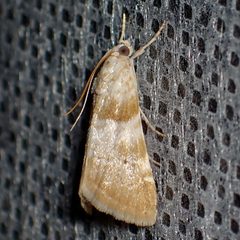
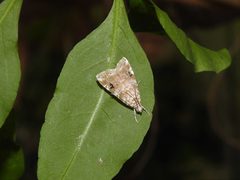
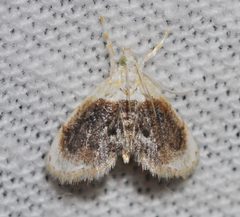
Pronunciation
How to pronounce Glaphyriinae: //ɡlæˈfɪriɪnaɪ//
These audio files are automatically generated. While they are not always 100% accurate, they are a good starting point.
Identification
Glaphyriinae are distinguished from other Crambidae primarily through molecular and larval characteristics rather than consistent morphological synapomorphies. The subfamily includes the tribes Glaphyriini and Dichogamini. Some , such as Chalcoela, contain with distinctive including predatory larval in nests.
Images
Diet
Larvae predominantly feed on plants of the order Brassicales. They are able to digest glucosinolates, the characteristic chemical defenses of this plant order. The Chalcoela includes at least one , Chalcoela iphitalis, whose larvae are predatory on paper wasp (Polistes) larvae inside their nests.
Host Associations
- Brassicales - larval plantPrimary order; larvae can detoxify glucosinolates
- Polistes metricus - predatory Larvae of Chalcoela iphitalis prey on larvae in nests
Behavior
females of Chalcoela iphitalis have been observed approaching paper wasp nests at night when adult are less alert, laying on the exterior of nests for larvae to enter .
Ecological Role
Most larvae function as herbivores on Brassicales, contributing to nutrient cycling and plant-insect interactions. The Chalcoela represents a rare case of within Lepidoptera, with larvae acting as of social larvae. This also serves as for wasps, including Calliephialtes grapholithae (Ichneumonidae).
Human Relevance
Some are agricultural pests on Brassicaceae crops. The glucosinolate detoxification capability of larvae has attracted scientific interest for understanding biochemical . The unusual predatory of Chalcoela species in nests has been documented in citizen science and ecological research contexts.
Similar Taxa
- CrambinaeAlso Crambidae ; Glaphyriinae distinguished by larval specialization on Brassicales and associated biochemical adaptations
- PyraustinaeFormerly broader from which Glaphyriinae was separated based on molecular and larval
More Details
Systematic History
The was established by Forbes in 1923. Modern classification relies heavily on molecular , with Regier et al. (2012) confirming Glaphyriinae as a distinct lineage within Pyraloidea. Solis (2009) transferred several western hemisphere from Cybalomiinae to Glaphyriinae.
Tribal Classification
Glaphyriinae contains two recognized tribes: Glaphyriini (Forbes, 1923) and Dichogamini (Amsel, 1956). The tribe Glaphyriini includes the type Glaphyria and the economically significant genus Hellula.
Biochemical Specialization
The ability to feed on Brassicales is relatively uncommon in Lepidoptera due to glucosinolate defenses. Glaphyriinae larvae share this capability with some Pieridae butterflies and certain Chrysomelidae beetles, representing of detoxification mechanisms.