
Crambini
Grass-Veneers
Genus Guides
19- Agriphila(grass-veneer moths)
- Almita
- Arequipa
- Catoptria
- Chrysoteuchia(sod webworms)
- Crambini incertae sedis
- Crambus(sod webworm moth)
- Fernandocrambus
- Fissicrambus(Grass-veneers)
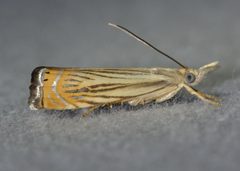
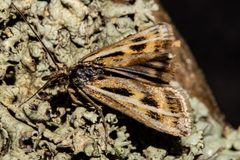
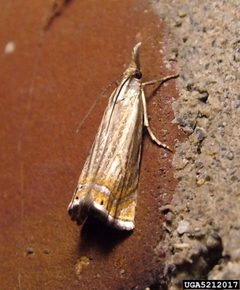
Crambini is a tribe of within the Crambinae, commonly known as Grass-Veneers. The tribe includes over 1,800 worldwide. Larvae are predominantly root feeders or stem borers, with many species associated with grasses. The tribe is distinguished by tympanal organ structure and the phallus attached medially to the juxta.
Pronunciation
How to pronounce Crambini: //ˈkɹæm.bɪˌniː//
These audio files are automatically generated. While they are not always 100% accurate, they are a good starting point.
Identification
Crambini can be distinguished from related crambine tribes by the structure of the tympanal organs and the phallus attached medially to the juxta. As a group, they are small to medium-sized with relatively narrow wings.
Images
Distribution
Worldwide distribution, with documented in New Zealand including members of the Orocrambus.
Diet
Larvae are root feeders or stem borers, primarily on grasses (Poaceae).
Host Associations
- Poaceae - larval food plantPrimary ; larvae feed on roots and stems
Life Cycle
includes , larval, pupal, and stages. For New Zealand , egg size, shape, and color vary by species. Larval and pupal instar durations and adult periodicity have been documented for multiple Orocrambus species.
Behavior
Larvae bore into stems or feed on roots of plants. Specific behavioral details vary among .
Ecological Role
Larvae contribute to nutrient cycling through their feeding activity on grasses. Some may influence plant structure through stem boring and root feeding.
Human Relevance
A few are agricultural pests of sod grasses, maize, sugar cane, rice, and other Poaceae crops.
Similar Taxa
- Other Crambinae tribesDistinguished by tympanal organ structure and male genitalia configuration; other tribes lack the medially attached phallus to the juxta characteristic of Crambini