
Fissicrambus
Bleszynski, 1963
Grass-veneers
Species Guides
8- Fissicrambus albilineellus
- Fissicrambus haytiellus(Carpet-grass Webworm Moth)
- Fissicrambus hemiochrellus
- Fissicrambus intermedius
- Fissicrambus minuellus
- Fissicrambus mutabilis(Changeable Grass-veneer)
- Fissicrambus profanellus(Profane Grass-veneer)
- Fissicrambus quadrinotellus
Fissicrambus is a of grass-veneer moths in the Crambidae, established by Bleszynski in 1963. The genus contains approximately 17 described distributed primarily in North America. Several species, notably F. mutabilis, are recognized as agricultural pests of turfgrass, wheat, and corn. Larvae are commonly known as sod webworms due to their habit of constructing silk-lined burrows in soil.
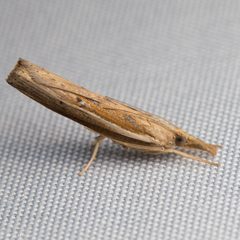
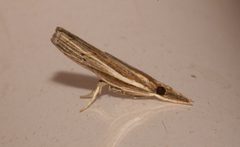
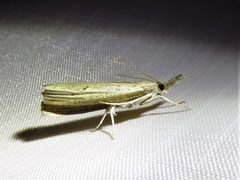
Pronunciation
How to pronounce Fissicrambus: /ˌfɪsɪˈkræmbəs/
These audio files are automatically generated. While they are not always 100% accurate, they are a good starting point.
Images
Habitat
Turfgrass systems; grass-dominated environments including lawns, pastures, and agricultural fields
Distribution
North America; records from United States including Vermont
Host Associations
- turfgrass - larval food plantprimary for pest
- wheat - larval food plantagricultural pest damage documented
- corn - larval food plantagricultural pest damage documented
Behavior
Larvae construct silk-lined burrows in soil at the base of plants; are and attracted to light
Ecological Role
Herbivore; some are significant agricultural pests causing damage to monocot crops and turfgrass
Human Relevance
Several are turfgrass and agricultural pests requiring management intervention; F. mutabilis known as striped is of particular economic concern in the United States
Similar Taxa
- ParapediasiaBoth are Crambinae grass-veneer with similar and larval habits in turfgrass; requires genitalia examination or molecular analysis for definitive separation
- PediasiaOverlapping preferences and similar appearance; Fissicrambus often distinguished by more pronounced forewing fissure or split at termen
More Details
Etymology
name derived from Latin 'fissus' (split or cleft) and 'crambus' (referring to the related genus Crambus), alluding to the characteristic split or notched termen of the forewing in many