
Eurema
Grass Yellows, Grass Yellow
Species Guides
5- Eurema albula(Ghost Yellow)
- Eurema boisduvaliana(Boisduval's Yellow)
- Eurema daira(Barred Yellow)
- Eurema mexicana(Mexican yellow)
- Eurema salome(Salome yellow)
Eurema is a widespread of grass yellow butterflies in the Pieridae, comprising over 70 distributed across Asia, Africa, Australia, Oceania, and the New World. The genus exhibits remarkable evolutionary phenomena including -induced feminization in multiple species, where genetic males are converted into functional females. Many species are characterized by seasonal diphenism—producing distinct wet-season and dry-season wing morphs. The type species is the North American barred yellow (Eurema daira).
Pronunciation
How to pronounce Eurema: //juˈriːmə//
These audio files are automatically generated. While they are not always 100% accurate, they are a good starting point.
Identification
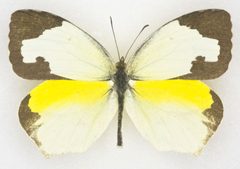
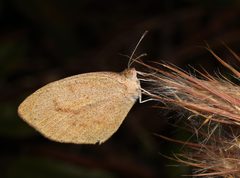
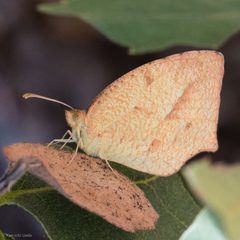
Eurema are small to medium-sized butterflies with wingspans typically ranging from 25–45 mm. They are predominantly yellow in coloration with black marginal markings, though some species exhibit white or orange tones. Many species display seasonal diphenism, with wet-season forms showing more extensive dark markings and dry-season forms appearing paler with reduced patterning. The can be distinguished from other Pieridae by the combination of rounded wing margins, relatively short forewings, and the presence of a single pair of spurs on the hind tibia. Male genitalia characteristics are often required for definitive species identification, particularly in the Western Ghats where multiple sympatric species occur.
Images
Habitat
vary considerably across the 's broad distribution. occupy tropical and subtropical regions including savannas, grasslands, open woodlands, forest edges, and disturbed areas. Some species are high-elevation endemics, such as Eurema nilgiriensis in the Western Ghats of India, restricted to elevations above 1000 meters. Others are widespread in lowland agricultural and urban landscapes. Larval plants are predominantly leguminous, with many species specializing on Fabaceae, though some utilize Phyllanthaceae and other .
Distribution
The has a pantropical and subtropical distribution spanning Asia, Africa, Australia, Oceania, and the New World. Individual show varying ranges: Eurema hecabe is broadly distributed across Asia and Australia; Eurema daira occurs in North and Central America; Eurema nicippe ranges from the southern United States through Central America; Eurema nilgiriensis is to the Western Ghats of southern India (Nilgiris, Agasthyamalais, and Kodagu).
Seasonality
Activity patterns vary by and locality. In temperate regions, are active primarily during spring through fall, with peak periods in summer. Tropical species may be active year-round with fluctuations tied to wet and dry seasons. Seasonal diphenism produces distinct morphological forms correlated with wet and dry seasons in many species. has been observed in males of some species, with activity concentrated at summit locations during specific hours.
Diet
feed on nectar from diverse flowering plants. Larvae are herbivorous, feeding primarily on leaves of leguminous plants (Fabaceae), including such as Cassia, Senna, and various other Fabaceae. Some have been recorded on Breynia (Phyllanthaceae). Specific host plant associations vary among species and .
Life Cycle
Complete with four stages: , larva (caterpillar), pupa (chrysalis), and . Eggs are laid singly or in small clusters on plant leaves. Larvae feed externally on foliage, typically completing development in 2–4 weeks depending on temperature and host quality. occurs on the host plant or nearby vegetation. The pupal stage lasts 1–2 weeks. Multiple occur annually in most tropical and subtropical . endosymbionts infect many populations, causing feminization of genetic males in Eurema mandarina and Eurema hecabe.
Behavior
are and active fliers, frequently visiting flowers for nectar. Males engage in in some , flying to elevated terrain to locate females. Male courtship persistence varies strategically, with some males exhibiting prolonged courtship attempts. Seasonal produces distinct morphs with different behavioral tendencies—wet-season forms are typically more active and dispersive, while dry-season forms may enter reproductive . Some species roost communally.
Ecological Role
serve as of diverse flowering plants. Larvae function as primary consumers, converting plant to animal biomass. The supports including that attack and larvae. in Eurema demonstrate complex - evolutionary dynamics with potential effects on population sex ratios and genetic structure.
Human Relevance
Some are common in agricultural and urban landscapes, occasionally reaching pest status on cultivated legumes. The butterflies are popular subjects for ecological and evolutionary research, particularly regarding -induced feminization, seasonal , and mitochondrial . Several species are featured in houses and exhibits worldwide. The common grass yellow (Eurema hecabe) is among the most frequently observed butterflies in parts of Asia and Australia.
Similar Taxa
- ColiasSimilar yellow coloration and preferences, but Colias (sulphurs) typically have more pointed wing margins, different wing venation, and lack the rounded wing shape characteristic of Eurema. Colias also tend to occur in cooler, higher-elevation habitats in many regions.
- PyrisitiaFormerly included within Eurema or treated as a subgenus; Pyrisitia are now recognized as distinct based on genitalic and molecular characters. They share the yellow coloration but differ in details of male genitalia structure and larval plant associations.
- NathalisThe dainty sulphur (Nathalis iole) is similar in size and coloration to small Eurema , but has more angular wing margins and distinctive dark spotting patterns. It is also more cold-tolerant and extends into temperate North America beyond the typical range of most Eurema species.
More Details
Wolbachia Feminization
Eurema mandarina and Eurema hecabe exhibit complete feminization of genetic males into functional females due to with two strains (wCI and wFem). This is a unique case among insects and has driven complex mitochondrial through hybrid .
Taxonomic Complexity
The has over 300 synonymous names applied to its , with some species such as Eurema hecabe having over 80 synonyms. The genus itself has over 15 junior generic synonyms, reflecting historical difficulties in species delimitation across its broad geographic range.
Mitochondrial Introgression
Phylogenetic studies indicate that shared by E. mandarina and E. hecabe originated from a different Eurema (possibly E. ada or E. lacteola), with driving the spread of associated mtDNA haplotypes across multiple species.
Sources and further reading
- BugGuide
- Wikipedia
- iNaturalist taxon
- NCBI Taxonomy
- Catalogue of Life
- Bug Eric: Hilltopping
- Bug Eric: November 2010
- Bug Eric: September 2010
- Bug Eric: 2010
- Belostomatidae | Beetles In The Bush
- Presencia y distribución de dos sub-especies de Eurema agave (Lepidoptera, Pieridae) en Costa Rica Presence and distribution of two sub-species of Eurema agave (Lepidoptera, Pieridae) in Costa Rica
- Current distribution of Nilgiri grass yellow Eurema nilgiriensis Yata (Lepidoptera: Pieridae), with an updated taxonomic key to Eurema of Western Ghats, India
- Wolbachia ‐induced feminisation newly found in Eurema hecabe , a sibling species of Eurema mandarina (Lepidoptera: Pieridae)
- Ecological and Behavioral Aspects of Seasonal Diphenism in Eurema Daira (Pieridae, Lepidoptera)
- Elusive origin of mitochondria shared by two sister species of Eurema butterflies
- Breynia retusa (Phyllanthaceae): New larval host plant for Eurema andersonii (Moore 1886) (Lepidoptera: Pieridae) from India
- D-Pinitol involved in host recognition by common grass yellow,Euremamandarina, toward leguminous plants
- Creature Note #6 A Host Plant for the Common Yellow Grass ( Eurema hecabe phoebus)
- Life History notes on the Scalloped Green-yellow, Eurema alitha
- Life History Notes on the Large Grass-yellow, Eurema hecabe hecabe
- Strategic Variation in Male Courtship Persistence in the Butterfly Eurema hecabe.
- Single-cell genome analysis of a feminizing Wolbachia in Eurema butterflies reveals a shared origin with male-killing Wolbachia.