
Eurema daira
(Godart, 1819)
Barred Yellow, Fairy Yellow, Barred Sulphur
Eurema daira is a small pierid exhibiting seasonal diphenism, with distinct wet and dry season morphs. The ranges from Argentina northward through Central America, the Caribbean, and into the southern United States. are active year-round in southern portions of the range, with notable dry-season where wet-season morphs (particularly females) move upslope 40–50 km and up to 2,000 m higher in elevation. The species has been documented as a principal of Cnidoscolus urens.
Pronunciation
How to pronounce Eurema daira: /jʊˈriːmə ˈdaɪrə/
These audio files are automatically generated. While they are not always 100% accurate, they are a good starting point.
Identification
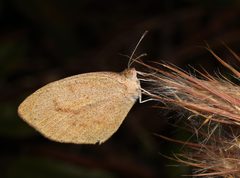
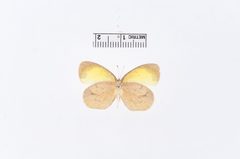
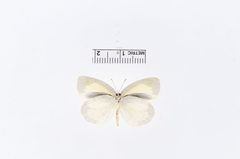
Distinguished from other Eurema by the combination of small size, pale yellow ground color, and dark marginal banding on forewings (in wet season form). Dry season form may be confused with Eurema nicippe (Sleepy Orange) but lacks the orange tint and has more rounded wing margins. Eurema lisa (Little Yellow) is smaller with more pointed forewings. Barred Yellow shows distinct seasonal forms, whereas related species typically do not.
Images
Habitat
Open including pasture, savanna, and coastal strand. In Central America, concentrate in regularly grazed pastures where larval plants occur. Also found in mosaic landscapes of orchards, pasture, second growth, deciduous forest, and riparian forest edges. Occurs from sea level to 2,000 m elevation during dry-season emigrations.
Distribution
Northern Argentina northward through South America, Central America, the Antilles, and southeastern United States. Strays recorded as far north as southern Arizona, South Dakota, southern Texas, and Washington, D.C. Multiple recognized across range: E. d. daira (southeastern U.S.), E. d. palmira (West Indies), E. d. eugenia (Mexico to Panama), E. d. sidonia (Mexico), E. d. lydia (Venezuela, Colombia), E. d. macheti (French Guiana).
Seasonality
on wing year-round in southern portion of range. In temperate North America, active late summer and fall as vagrant. Seasonal diphenism pronounced: wet season form active during rainy season, dry season form during dry season with associated upslope .
Diet
Larvae feed on Fabaceae including Stylosanthes biflora and Aeschynomene species (with Aeschynomene americana documented as at Rica study site). feed on nectar of various flowers including joint vetches (Aeschynomene), shepherd's needle, and are principal of Cnidoscolus urens.
Host Associations
- Stylosanthes biflora - larval Fabaceae, documented larval food plant
- Aeschynomene americana - larval Fabaceae, primary at Rica study site
- Aeschynomene species - larval Fabaceae, multiple used
- Cnidoscolus urens - are principal
Life Cycle
Complete with , larva, pupa, and stages. Larvae feed on Fabaceae plants. Seasonal diphenism produces distinct wet and dry season adult morphs that differ in coloration and . Dry season onset triggers behavior in wet season morphs, particularly females.
Behavior
Exhibits seasonal diphenism with distinct behavioral shifts. At dry season onset, wet season morphs (especially females) emigrate upslope 40–50 km and up to 2,000 m higher in elevation, forming reproductive or resting in localities where the is absent during wet season. Males patrol hilltops and ridges seeking females. roost in vegetation during inclement weather.
Ecological Role
Larval herbivore on Fabaceae. , notably the principal pollinator of Cnidoscolus urens. Contributes to pollination networks in open tropical and subtropical .
Human Relevance
Occasional vagrant to temperate North America, recorded as far north as Washington, D.C. No significant agricultural or economic impact documented. Subject of ecological research on seasonal diphenism and .
Similar Taxa
- Eurema nicippeSimilar size and pale coloration; Sleepy Orange has orange tint to wings, more angular wing margins, and lacks pronounced seasonal diphenism
- Eurema lisaLittle Yellow is smaller (wingspan 25–32 mm), has more pointed forewings, and more consistent dark markings without seasonal variation
- Eurema proterpiaTailed Orange has distinctive hindwing tails and more orange ground color, lacks barred yellow pattern
More Details
Seasonal Diphenism
Eurema daira exhibits one of the best-documented cases of seasonal diphenism in butterflies. Wet season forms have more extensive dark wing markings and remain in lowland breeding areas. Dry season forms are paler with reduced markings and show pronounced , particularly in females.
Upslope Emigration
During dry season onset, wet season morphs (especially females) undertake directed movements upslope 40–50 km and up to 2,000 m higher in elevation. This produces reproductive or resting in montane localities where the is completely absent during the wet season.
Subspecies Diversity
Six recognized across broad Neotropical and Nearctic range, showing geographic variation in wing pattern and seasonality. nominate subspecies daira in southeastern U.S., palmira in West Indies, eugenia from Mexico to Panama, sidonia in Mexico, lydia in northern South America, and macheti in French Guiana.