
Eurema boisduvaliana
(C. Felder & R. Felder, 1865)
Boisduval's Yellow
Eurema boisduvaliana, commonly known as Boisduval's yellow, is a in the Pieridae. It is found from Rica north to Mexico, with regular seasonal to southeastern Arizona, southwestern New Mexico, and southern Texas. Rare strays have been recorded in southern Florida. The inhabits subtropical forests, forest edges, scrublands, roadsides, and pastures.
Pronunciation
How to pronounce Eurema boisduvaliana: /juːˈrɛmə bɔɪˈduːvæliˌɑːnə/
These audio files are automatically generated. While they are not always 100% accurate, they are a good starting point.
Identification
Most authors treat Eurema boisduvaliana as a of Eurema arbela, which complicates field identification. In the United States, it is a regular migrant to southeastern Arizona, southwestern New Mexico, and southern Texas, whereas E. arbela is primarily a tropical . Separation from other Eurema species in the field requires careful examination of wing pattern details and consideration of geographic location and season.
Images
Appearance
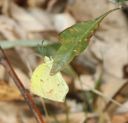
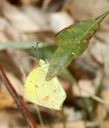
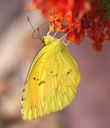
Wingspan ranges from 38–51 mm (1.5–2.0 in). As a member of the yellow group (Pieridae), are predominantly yellow in coloration. Specific wing pattern details distinguishing it from are not well documented in available sources.
Habitat
Subtropical forests and forest edges, scrublands, roadsides, and pastures. The shows flexibility in use, occurring in both intact forested areas and disturbed open habitats including agricultural margins.
Distribution
Native range extends from Rica north through Mexico. In the United States, it is a regular seasonal migrant to southeastern Arizona, southwestern New Mexico, and southern Texas. Rare strays have been documented in southern Florida.
Seasonality
are on wing from April to November in southern Texas and areas northward. In tropical portions of its range, adults fly year-round. The exhibits migratory , with regular seasonal appearance in the U.S. border states.
Diet
feed on flower nectar. Larvae feed on Cassia (now broadly classified in Senna within Fabaceae).
Host Associations
- Cassia - larval larval food plant; now placed in Senna
Life Cycle
Complete typical of Lepidoptera. laid on larval plants (Cassia/Senna ). Larvae feed on host plant foliage before pupating. emerge and feed on nectar. Multiple per year in tropical portions of range; fewer generations in northern migratory areas.
Behavior
Exhibits migratory with regular seasonal movement into the southwestern United States. Males may engage in behavior (patrolling ridge tops to locate females), as observed in like Eurema nicippe.
Ecological Role
serve as when feeding on nectar. Larvae function as herbivores on Cassia/Senna . The species contributes to local biodiversity in subtropical and tropical and serves as a food source for and .
Human Relevance
Occasional attraction to gardens and nectar plantings in the southwestern United States during migratory periods. Not known to be of agricultural significance. Subject of interest to lepidopterists due to its migratory and taxonomic relationship to E. arbela.
Similar Taxa
- Eurema arbelaMost authors treat E. boisduvaliana as a of E. arbela; the two are very similar in appearance and require careful examination for separation. E. arbela is primarily tropical, while E. boisduvaliana shows regular migratory into the southwestern United States.
- Eurema nicippeBoth are yellow pierid butterflies with similar size and general appearance. E. nicippe (sleepy orange) is more widespread and resident in the southern United States, whereas E. boisduvaliana is primarily a tropical with migratory in the border states.
- Eurema dairaAnother small yellow pierid with overlapping range in the southern United States and Mexico; requires careful wing pattern examination for reliable identification.
More Details
Taxonomic Status
The taxonomic status of Eurema boisduvaliana remains unsettled. Most authors currently treat it as a of Eurema arbela (Cramer, [1775]), though some sources maintain it as a distinct . This uncertainty reflects ongoing debate about species limits within the Eurema arbela complex.
Migration Pattern
Unlike many migratory butterflies that undergo dramatic long-distance movements (e.g., monarchs), E. boisduvaliana shows regular but more localized seasonal from tropical Mexico into the subtropical and warm-temperate regions of the southwestern United States. This pattern is predictable enough that it is considered a 'regular migrant' rather than an occasional stray in Arizona, New Mexico, and Texas.