
Eurema albula
(Cramer, [1775])
Ghost Yellow
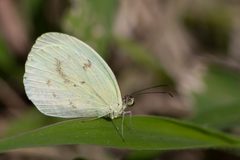
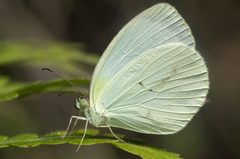
Eurema albula, commonly known as the ghost yellow, is a small in the Pieridae. It ranges from southern Texas through the West Indies and tropical Central and South America to Brazil. are active year-round in tropical regions and feed on flower nectar. The inhabits tropical forests and second-growth vegetation.
Pronunciation
How to pronounce Eurema albula: /jʊˈriːmə ælˈbjuːlə/
These audio files are automatically generated. While they are not always 100% accurate, they are a good starting point.
Identification
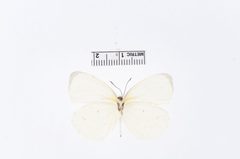
Distinguished from other Eurema by its pale, ghostly coloration and geographic distribution. In southern Texas, it occurs as a rare stray, making it distinguishable from resident Eurema species in that region. The combination of small size (wingspan 30–50 mm), pale yellow to white wings, and tropical forest helps separate it from similar temperate-zone pierids.
Images
Habitat
Tropical forests and second-growth vegetation. Occurs in lowland to mid-elevation tropical throughout its range.
Distribution
Southern Texas (rare stray), West Indies, mainland tropical Central America, and South America to Brazil. Specific records include Colombia (Leticia, Villavicencio, Bolívar, Turbaco, and multiple river basin localities).
Seasonality
are on wing year-round in tropical portions of the range. In southern Texas, occurs as a rare stray with no established breeding .
Diet
feed on flower nectar. Larvae feed on Cassia (Fabaceae), specifically including Cassia fruticosa.
Host Associations
- Cassia fruticosa - larval food plantConfirmed larval
- Cassia - larval food plant-level association
Life Cycle
Complete with , larva, pupa, and stages. Larvae feed on Cassia . Adults are active year-round in the tropics, suggesting continuous breeding without strong seasonal .
Behavior
engage in flower-visiting to obtain nectar. Males of related Eurema are known to exhibit behavior (patrolling ridge tops to locate females), though this has not been specifically documented for E. albula.
Ecological Role
function as while feeding on nectar. Larvae are herbivores on leguminous plants. Serves as prey for various including birds, reptiles, and .
Human Relevance
Minimal direct economic impact. Occasionally observed by enthusiasts. Rare stray individuals in southern Texas generate interest among lepidopterists documenting vagrant .
Similar Taxa
- Eurema nicippeSimilar size and coloration; both occur in southern Texas and tropical regions. E. nicippe (sleepy orange) is more orange in color and has different wing pattern elements.
- Eurema dairaAnother small pierid in the same with overlapping range; distinguished by wing pattern and coloration differences.
- Eurema lisaSimilar pale coloration; E. lisa (little yellow) is smaller and has different wing shape and pattern.