
Eurema salome
(Felder & Felder, 1861)
Salome yellow
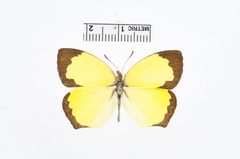
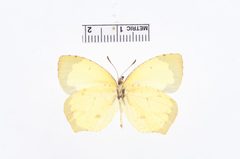
Eurema salome is a small yellow in the Pieridae, commonly known as the Salome yellow. It ranges from Peru northward through tropical America and is an extremely rare migrant to the lower Rio Grande Valley in Texas. The inhabits forest openings, edges, and roadcuts, with active year-round in the tropics and from August to September in southern Texas.

Pronunciation
How to pronounce Eurema salome: /jʊˈɹiːmə səˈloʊˌmi/
These audio files are automatically generated. While they are not always 100% accurate, they are a good starting point.
Identification
Distinguished from other Eurema by its specific geographic range and wing pattern details. In the lower Rio Grande Valley of Texas, it is an extremely rare migrant and would be distinguished from the more common Sleepy Orange (Eurema nicippe) and other resident yellows by its occurrence pattern and subtle wing markings. The species is part of a complex of Neotropical Eurema that are difficult to separate without close examination.
Images
Appearance
Habitat
Forest openings and edges, roadcuts. In tropical regions, occupies disturbed forest and clearings. In Texas, occurs in subtropical thorn scrub and riparian corridors where it appears as a rare vagrant.
Distribution
From Peru northward through tropical America. In the United States, it is an extremely rare migrant to the lower Rio Grande Valley in Texas. Records exist from Colombia (Bucaramanga, Floridablanca, Municipio Pueblo Rico, Risaralda, Reserva Natural de la Sociedad Civil Karagabí, Cuenca río Coello, Cuenca río Totare), Venezuela, Ecuador, Mexico, and Peru.
Seasonality
are on wing all year round in the tropics. In southern Texas, adults occur from August to September.
Diet
feed on flower nectar from a wide variety of flowers. Larvae feed on Diphysa (Fabaceae).
Host Associations
- Diphysa - larval plant
Life Cycle
Complete with , larva, pupa, and stages. Larvae feed on Diphysa . Specific details of site and strategy are not documented.
Behavior
are nectar-feeders and likely engage in typical of the , where males patrol ridge tops to locate females. to Texas is extremely rare and likely wind-assisted.
Ecological Role
serve as while feeding on nectar. Larvae are herbivores that consume Diphysa foliage. The contributes to local biodiversity in Neotropical forest .
Human Relevance
Of interest to lepidopterists due to its rarity as a migrant in the United States. Not known to be of agricultural or economic significance. Occasionally observed in gardens and natural areas in its native range.
Similar Taxa
- Eurema nicippeSleepy Orange is a common resident in the southern United States with similar yellow coloration; distinguished by more regular occurrence and subtle wing pattern differences
- Eurema dairaBarred Yellow shares similar preferences and range overlap; requires close examination of wing markings for separation
- Eurema mexicanaMexican Yellow occurs in overlapping range and shares general appearance; distinguished by wing pattern and geographic distribution details
More Details
Subspecies
Five are recognized: E. s. salome (Peru), E. s. limoneus (Venezuela), E. s. gaugamela (Colombia, Venezuela), E. s. jamapa (Mexico), and E. s. xystra (Ecuador)
Rarity in Texas
The is considered an extremely rare migrant to the lower Rio Grande Valley, with very few documented occurrences in the United States