
Oeneis jutta
Hübner, 1806
Jutta Arctic, Baltic grayling
Species Guides
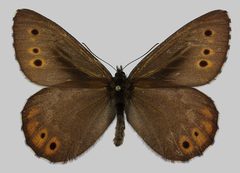
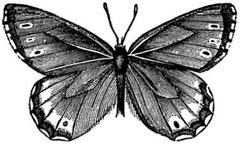
2Oeneis jutta, known as the Jutta Arctic or Baltic grayling, is a of the Satyrinae with a Circumboreal distribution spanning northern Eurasia and North America. The inhabits cold, open environments including bogs and tundra. Larvae feed primarily on sedges and cottongrass, while nectar on Ledum palustre. The species exhibits a flexible with one every one to two years depending on location.
Pronunciation
How to pronounce Oeneis jutta: /ˈiː.nɛ.ɪs ˈjʊt.tɑ/
These audio files are automatically generated. While they are not always 100% accurate, they are a good starting point.
Images
Habitat
Inhabits bogs and tundra in and subarctic regions. Found in open, wet, acidic environments with low vegetation cover.
Distribution
Circumboreal: northern Europe, Baltic states, Urals, Siberia, northern Kazakhstan, Russian Far East, northern Mongolia, northeastern China, North Korea, and northern North America from Newfoundland to British Columbia.
Diet
Larvae feed on Carex and Eriophorum; possibly also Glyceria, Molinia, and Juncus. nectar primarily on Ledum palustre.
Host Associations
- Carex - larval food plantprimary
- Eriophorum - larval food plantprimary
- Glyceria - possible larval food plantunconfirmed
- Molinia - possible larval food plantunconfirmed
- Juncus - possible larval food plantunconfirmed
- Ledum palustre - nectar sourcepreferred nectar plant
Life Cycle
One every one or two years, with timing dependent on geographic location. Developmental stages include , larva, pupa, and .
Similar Taxa
- Oeneis nevadensisSimilar preference for high-elevation and northern environments; both are Arctic butterflies in the same
- Oeneis chryxusCongeneric Arctic with overlapping range in North America; both inhabit open, cold environments
More Details
Subspecies diversity
Recognized include O. j. jutta (nominate), O. j. alaskensis (Alaska, Yukon, northern British Columbia), O. j. balderi (Newfoundland), O. j. chermocki (western Alberta, southern British Columbia), O. j. harperi (northern Manitoba, eastern Northwest Territories), O. j. leussleri (western Northwest Territories), O. j. ridingiana (southwestern Manitoba, Saskatchewan), and O. j. sibirica (Yakutia, Magadan, Chukot Peninsula), among others.
Collection significance
The Oeneis (Arctics) is noted by lepidopterists for its association with high mountain and northern , making specimens valuable for documenting climate-sensitive biodiversity.
Sources and further reading
- BugGuide
- Wikipedia
- GBIF taxonomy match
- iNaturalist taxon
- NCBI Taxonomy
- Catalogue of Life
- Rising from the Ashes--Some Day | Bug Squad
- Oh, the Butterflies You'll See at the Bohart During UC Davis Biodiversity Museum Day | Bug Squad
- Beekeepers and the COVID-19 Virus | Bug Squad
- Jutta Schneider Archives - Entomology Today
- Arachnid Matriphagy: These Spider Mothers Literally Die for Their Young