
Oeneis alpina
Kurentsov, 1970
sentinel Arctic, Eskimo Arctic
Oeneis alpina is a in the Satyrinae, commonly known as the sentinel Arctic or Eskimo Arctic. The has a wingspan of approximately 40 mm and exhibits in size and coloration. It occurs in a single during June and July, with males congregating on hilltops and rocky tundra features while females oviposit in wet boggy areas. The species is distinguished from its Oeneis chryxus by the number of hindwing eyespots.
Pronunciation
How to pronounce Oeneis alpina: /ˈoʊn.aɪs ælˈpaɪ.nə/
These audio files are automatically generated. While they are not always 100% accurate, they are a good starting point.
Identification
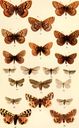
Distinguished from the brown Arctic (Oeneis chryxus) by having two eyespots on the hindwing versus one in O. chryxus. The combination of two hindwing eyespots, dark basal wing coloration, and grey-brown streaked hindwing underside separates O. alpina from other Oeneis in its range.
Images
Habitat
Tundra regions, specifically hilltops, screes, rocky outcrops (male congregation sites), and wet boggy areas (female oviposition sites).
Distribution
Northeastern Siberia (Chukot and Magadan regions), and tundra regions of Alaska, Yukon, and Northwest Territories, Canada.
Seasonality
Single (); active in June and July.
Host Associations
- Poa - plant deposited on or near grasses; specific Poa not confirmed
Life Cycle
Single per year with emerging in June and July. Larvae believed to overwinter twice before , resulting in locally abundant only in alternate years. laid on or near grasses in wet boggy areas. Detailed larval development poorly known.
Behavior
Males congregate on hilltops, screes, and rocky places in tundra regions. Females fly to these sites for mating, then return to wet boggy areas to oviposit.
Ecological Role
; herbivore as larva. suggest role as prey for tundra , though specific relationships undocumented.
Similar Taxa
- Oeneis chryxusSimilar size, coloration, and ; distinguished by single hindwing eyespot versus two in O. alpina
More Details
Population dynamics
Local abundance occurs only in alternate years, consistent with a two-year larval development period involving two stages.
Subspecies
Two recognized : O. a. alpina (Magadan, Chukot Peninsula) and O. a. execubitor (northern Yukon, Northwest Territories, northern Alaska).