
Chlosyne whitneyi
(Behr, 1863)
rockslide checkerspot, Sierra Nevada checkerspot
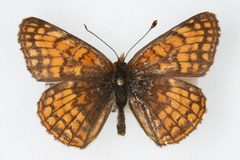
Chlosyne whitneyi is a small checkerspot native to mountainous regions of western North America. are active from July to August in a single . The is tightly associated with alpine rockslide and scree slope . Larvae feed on Erigeron and Solidago species in the sunflower .


Pronunciation
How to pronounce Chlosyne whitneyi: //kloʊˈsaɪni ˈwɪtni.aɪ//
These audio files are automatically generated. While they are not always 100% accurate, they are a good starting point.
Identification
The combination of alpine rockslide , July–August period, and geographic location distinguishes C. whitneyi from other western North American checkerspots. C. palla (northern checkerspot) occurs in overlapping range but typically at lower elevations and with different plant associations. C. gabbii (Gabb's checkerspot) and C. acastus (sagebrush checkerspot) occupy different habitats. Precise wing pattern differences require reference to literature.
Images
Habitat
Alpine rockslides and scree slopes in mountainous terrain. The is tightly restricted to this specific rocky, high-elevation type.
Distribution
Western North America: British Columbia and Alberta south through the Rocky Mountains and Sierra Nevada to California and Colorado. Distribution is continuous through mountain ranges but absent from intervening lowlands.
Seasonality
active July to August. One per year ().
Diet
Larvae feed on various Asteraceae , specifically Erigeron and Solidago. diet not documented in available sources.
Host Associations
- Erigeron - larval food plant in Asteraceae
- Solidago - larval food plant in Asteraceae
Life Cycle
Complete with , larva, pupa, and stages. One per year. Larval stage feeds on plants before pupating. Adults emerge in mid-summer. stage not specified in available sources.
Behavior
are on wing during mid-summer in alpine . Specific such as mating, territoriality, or patterns not documented in available sources.
Ecological Role
Larval herbivore on alpine Asteraceae. likely serves as and prey for . Specific functions not documented.
Human Relevance
No documented economic or cultural significance. Of interest to lepidopterists and alpine ecologists.
Similar Taxa
- Chlosyne pallaOverlapping western range but typically at lower elevations; different preferences and associations
- Chlosyne laciniaSimilar checkered pattern but occurs in desert and grassland at lower elevations; different period
- Chlosyne gabbiiAnother western checkerspot with different specificity
More Details
Subspecies
Two recognized: C. w. whitneyi and C. w. damoetas (Skinner, 1902). Geographic differentiation between subspecies not detailed in available sources.