
Burnsius oileus
(Linnaeus, 1767)
Tropical Checkered-Skipper
A small ( Hesperiidae) found from the southern United States through the Neotropics. are active year-round in tropical regions and during warmer months in temperate areas. The was transferred from Pyrgus to Burnsius in 2019 based on molecular phylogenetic studies.
Pronunciation
How to pronounce Burnsius oileus: /ˈbɝnsiəs ˈoɪliəs/
These audio files are automatically generated. While they are not always 100% accurate, they are a good starting point.
Identification
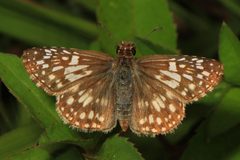
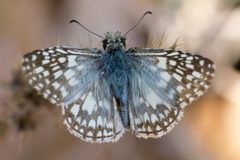
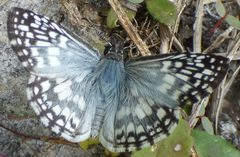
Distinguished from other checkered-skippers by the combination of: white spots on the hindwing arranged in a curved band (not straight); forewing with white spots in M1 and M2 that are roughly equal in size; and a more extensively dark hindwing base on the ventral surface compared to Burnsius communis. Males lack the costal fold found in some related .
Images
Habitat
Open, sunny including fields, gardens, roadsides, and disturbed areas. Often associated with low vegetation and weedy patches in subtropical and tropical regions.
Distribution
Peninsular Florida, Gulf Coast, and southern Texas in the United States; south through the West Indies, Mexico, and Central America to Rica. Records extend into northern South America.
Seasonality
Year-round in tropical portions of range; primarily spring through fall in subtropical United States. Multiple per year where climate permits.
Diet
Larvae feed on plants in the Malvaceae, including Sida, Waltheria, and Malvastrum. visit flowers for nectar.
Host Associations
- Sida - larval primary
- Waltheria - larval
- Malvastrum - larval
Life Cycle
Complete with , larva, pupa, and stages. Larvae construct leaf shelters by folding or rolling leaves. occurs within the larval shelter. Multiple per year in most of range.
Behavior
are rapid, darting fliers that stay low to the ground. Males perch on low vegetation to await females. Both sexes visit flowers frequently. Adults often bask with wings partially open.
Ecological Role
as ; larval herbivore on Malvaceae. Serves as prey for various including birds, spiders, and predatory insects.
Human Relevance
Occasionally encountered in gardens. Not of agricultural significance. Sometimes used in citizen science monitoring programs due to its wide distribution and relative abundance.
Similar Taxa
- Burnsius communisOverlaps extensively in range; distinguished by straighter white spot band on hindwing and smaller, more separated white spots on forewing
- Pyrgus albescensSimilar size and checkered pattern; distinguished by more extensive pale markings and different wing spot arrangement
- Burnsius philetasFormerly placed in same ; distinguished by more extensive white markings and different spot configuration