
Burnsius philetas
(Edwards, 1881)
Desert Checkered-Skipper
Burnsius philetas, the desert checkered-skipper, is a small (wingspan 25–29 mm) found in arid regions of the southwestern United States and northern Mexico. Formerly classified under Pyrgus, this was reassigned to the Burnsius based on molecular and morphological evidence. It exhibits multiple per year with activity extending from early spring through late fall, with timing varying by latitude and elevation. The species is notable for its checkered wing pattern and association with dry, open .


Pronunciation
How to pronounce Burnsius philetas: //ˈbɜːn.si.əs faɪˈleɪtəs//
These audio files are automatically generated. While they are not always 100% accurate, they are a good starting point.
Identification
Distinguished from similar checkered-skippers by combination of size, geographic range, and preference. Smaller than many Pyrgus with which it was formerly grouped. Most reliably separated from Burnsius communis (common checkered-skipper) by distribution—B. philetas occupies more arid, southern habitats while B. communis ranges more broadly and extends farther north. Genitalia examination may be required for definitive identification where ranges overlap. Wing checkering pattern tends to be more regular and less variable than in some .
Images
Appearance
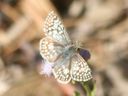
Small with wingspan 25–29 mm. Wings display characteristic checkered pattern of dark and light markings typical of the . Upper wing surfaces show contrasting dark brown to black checkering against lighter ground color. Body relatively robust with large . terminate in hooked clubs, diagnostic of Hesperiidae. Wing shape somewhat triangular with pointed forewings.
Habitat
Occupies arid and semi-arid open including desert grasslands, scrublands, and dry washes. Associated with open, sunny areas supporting larval plants in Malvaceae. Found from low desert elevations up to moderate elevations in transition zones. Habitats characterized by sparse to moderate vegetation cover with exposed ground.
Distribution
Southern United States from southern Arizona east to southern Texas, extending south into northern Mexico. Disjunct occur north to northern Arizona and northern Texas, representing range extensions beyond core desert distribution.
Seasonality
Two to three per year. Activity period February through December in southern Texas, April through October in Arizona. timing varies with latitude and elevation, with lower elevations and more southerly locations supporting longer flight seasons.
Diet
Larvae feed on plants in Malvaceae, specifically including Malvastrum and Sida. feed on flower nectar from available blooming plants.
Host Associations
- Malvastrum - larval in Malvaceae; specific not documented in sources
- Sida - larval in Malvaceae; specific not documented in sources
Life Cycle
Multivoltine with two to three annually. Complete with , larva, pupa, and stages. Larval development occurs on Malvaceae plants. presumably occurs in sheltered locations on or near host plants, though specific details not documented. stage not explicitly described in available sources.
Behavior
are rapid, darting fliers typical of skippers. Males likely exhibit territorial and perch on low vegetation awaiting females, as observed in related . Adults visit flowers for nectar. Larval feeding occurs on leaves of plants.
Ecological Role
function as through nectar feeding. Larvae serve as herbivores on Malvaceae, potentially contributing to of plants. Serves as prey for various including birds, spiders, and insectivorous insects. Specific quantitative ecological impacts not documented.
Human Relevance
Of minor direct significance to humans. Contributes to biodiversity of southwestern desert . May be encountered by observers and photographers in appropriate . No documented economic importance as pest or beneficial .
Similar Taxa
- Burnsius communisFormerly Pyrgus communis; similar checkered wing pattern and size. Distinguished by broader geographic range extending farther north and into more mesic ; genitalia may be required for definitive separation where ranges overlap.
- Pyrgus speciesFormerly classified together; multiple Pyrgus share checkered skipper . Distinguished by subtle differences in wing pattern, size, and genitalia structure; molecular data supports generic separation.
More Details
Taxonomic History
Originally described as Hesperia philetas by Edwards in 1881. Long classified under Pyrgus, but reassigned to Burnsius based on phylogenetic studies. The Burnsius was resurrected to accommodate not closely related to core Pyrgus clade.
Conservation Status
Not formally assessed by major conservation organizations. Appears to be locally common within its range based on iNaturalist observation data (2464 records). loss and climate change in arid Southwest may pose future threats.