
Burnsius communis
(Grote, 1872)
common checkered-skipper
Burnsius communis, the common checkered-skipper, is a small in the Hesperiidae (skippers). Formerly classified as Pyrgus communis, this is among the most frequently encountered skippers in the northern United States. It is recognized by its distinctive checkered wing pattern and blue-gray body with fine hair. The species exhibits broad geographic distribution across North America, with multiple in southern regions and two broods in northern areas.

Pronunciation
How to pronounce Burnsius communis: /ˈbʌrn.si.əs kəˈmjuː.nɪs/
These audio files are automatically generated. While they are not always 100% accurate, they are a good starting point.
Identification
Distinguished from similar checkered-skippers by the combination of: (1) checkered black-and-white wing pattern with males showing broader bands than females, (2) blue-gray body with fine fuzz, and (3) small size (19–32 mm wingspan). Similar include Pyrgus scriptura (small checkered skipper), which is smaller and has more reduced pale markings; close examination of genitalia or wing pattern details may be required for definitive identification in areas of sympatry.
Images
Appearance
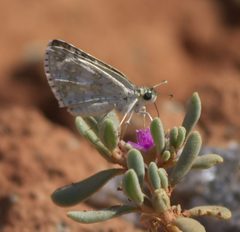
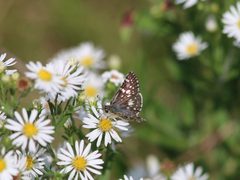
Small with wingspan of 19–32 mm. Wings display a checkered black-and-white pattern; males have broader bands than females. Body is blue-gray with fine setae (fuzz), characteristic of skippers. Wing margins are irregular, giving a somewhat tattered appearance typical of the group.
Habitat
Occurs in open, disturbed including gardens, parks, fields, roadsides, riverbanks, lowlands, and foothills. Tolerates a wide range of conditions from urban to rural settings. Associated with areas where plants (mallows, Malvaceae) grow.
Distribution
Southern Canada through almost the entire United States, extending into Mexico. Documented from Vermont and across the northern tier of states southward. One of the most widely distributed skippers in North America.
Seasonality
In southern regions, flies year-round with multiple . In northern regions, two broods with continuing late into fall. active during daylight hours.
Diet
Larval : mallow (Malvaceae). feeding: nectar from various flowers including Senecio flaccidus and other composites.
Host Associations
- Malvaceae - larval food plantmallow
Life Cycle
small, round, approximately 0.5 mm diameter, pale green, laid singly on tender parts of plant. Caterpillar has black and greenish-tan body with dark line and paler sides. details not specified in sources. Multiple per year in south, two broods in north.
Behavior
are rapid, darting fliers typical of skippers, with quick wingbeats and brief perching. Males patrol territories and perch on low vegetation. Adults visit flowers for nectar.
Ecological Role
of various flowering plants. Larvae function as herbivores on mallow plants. Serves as prey for various including birds and predatory insects.
Human Relevance
Frequently encountered by watchers and collectors due to abundance and wide distribution. Tolerates disturbed and urban , making it accessible for observation. Not of agricultural significance.
Similar Taxa
- Pyrgus scripturaSmall checkered skipper; smaller size and more reduced pale wing markings distinguish it from B. communis
More Details
Taxonomic History
Formerly placed in Pyrgus as Pyrgus communis; transferred to Burnsius based on phylogenetic studies. Basionym Syricthus communis Grote, 1872.
Collecting Significance
Described as 'the frequently seen Pyrginae in the northern United States by collectors and watchers alike'—indicating its importance as a common, accessible species for lepidopterists.