
Pyrgus scriptura
(Boisduval, 1852)
Small Checkered-Skipper, small checkered skipper
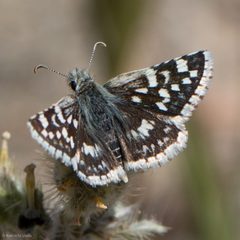
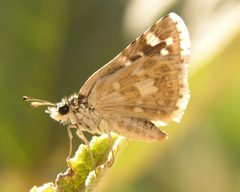
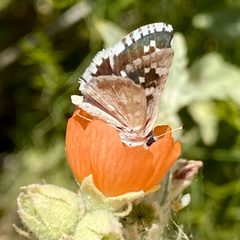
Pyrgus scriptura is a small in the Hesperiidae, commonly known as the small checkered skipper. It occurs across the western and central United States and southern Canada. The has two per year and is associated with open, dry . Larvae feed on plants in the mallow family (Malvaceae), particularly Sida hederacea.
Pronunciation
How to pronounce Pyrgus scriptura: /ˈpɪr.ɡəs skrɪpˈtuː.ra/
These audio files are automatically generated. While they are not always 100% accurate, they are a good starting point.
Identification
A small skipper with wingspan 16–22 mm. The refers to the checkered black-and-white pattern on the wings. Distinguished from similar Pyrgus by its small size and specific wing pattern details; precise identification may require examination of genitalia or comparison with regional such as Pyrgus communis (common checkered-skipper), which is larger and has a different distribution pattern.
Images
Habitat
Open, dry including shortgrass prairie, pinyon-juniper woodland edges, and riparian corridors in arid regions. Associated with areas where larval plants (Malvaceae) occur.
Distribution
North America: United States from Texas north to Montana; Canada in southeastern Alberta and southwestern Saskatchewan.
Seasonality
Two per year, with active from May through August.
Diet
Larvae feed on Malvaceae , specifically Sida hederacea (ivy-leaf sida) and other mallows. diet not explicitly documented in sources.
Host Associations
- Sida hederacea - larval primary plant
- Malvaceae - larval -level association
Life Cycle
Two annually. laid on plant leaves. Larvae feed on host plant foliage and presumably pupate on or near the host. emerge in spring (first generation) and mid-summer (second generation).
Similar Taxa
- Pyrgus communisLarger size; common checkered-skipper has broader distribution and different wing pattern proportions
- Burnsius communisFormerly placed in Pyrgus; similar checkered pattern but different and typically more common in eastern regions
More Details
Subspecies
Two recognized: Pyrgus scriptura scriptura and Pyrgus scriptura apertorum Austin, 1998 (described from more arid western )
Conservation status
Not considered threatened; widespread and relatively common within its range