
Erynnis martialis
(Scudder, 1869)
Mottled Duskywing
Erynnis martialis, the mottled duskywing, is a small in the Hesperiidae. It occurs across much of the eastern United States and parts of southern Canada. The is closely associated with oak savanna and has experienced significant declines due to habitat loss and fragmentation. It is listed as a species of special concern in Connecticut, where it is believed extirpated.
Pronunciation
How to pronounce Erynnis martialis: //ɛrˈɪn.nɪs mɑrˈtiːə.lɪs//
These audio files are automatically generated. While they are not always 100% accurate, they are a good starting point.
Identification
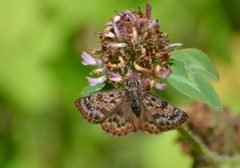
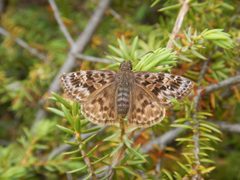
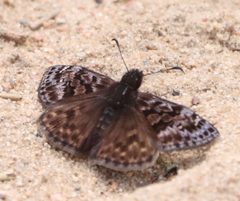
Distinguished from other Erynnis by its mottled wing pattern; most have more uniform dark coloration or different spot arrangements. Similar in size to other duskywings but the irregular pale markings on dark background are diagnostic. examination may be needed to separate from closely related species. Two occur annually, with periods from mid-May to late August.
Images
Appearance
Small, compact skipper with wingspan of 25–29 mm. Upper wing surface is dark brown to black with a mottled pattern of lighter spots and patches. The mottled appearance is distinctive among Erynnis . Wings are relatively broad and rounded compared to some other duskywings. Body is stout and hairy, typical of skippers.
Habitat
Oak savannas and adjacent open woodlands. Associated with sandy or rocky soils where plants grow. Requires open conditions with sufficient sunlight for larval host plants. Historically common in prairie-woodland transition zones.
Distribution
Eastern United States from the Great Plains eastward, extending into southern Ontario, Quebec, and southeastern Manitoba in Canada. Core range includes the Midwest and Northeast, with scattered southward. Absent or rare in the Deep South and far western portions of its range.
Seasonality
Two per year. fly from mid-May through late August, with peak activity varying by latitude and local conditions. First generation typically emerges in mid-May, second generation from mid-summer.
Diet
Larvae feed exclusively on wild lilacs in the Ceanothus ( Rhamnaceae), specifically New Jersey tea (Ceanothus americanus) and redroot (Ceanothus herbaceus). feed on nectar from various flowers including Bush houstonia, gromwell, and Verbena stricta.
Host Associations
- Ceanothus americanus - larval New Jersey tea
- Ceanothus herbaceus - larval Redroot
Life Cycle
, with two annually. laid on plant leaves. Larvae feed on host foliage, likely as pupae or partially grown larvae. occurs in leaf litter or loose soil. Development tied to of Ceanothus host plants.
Behavior
are rapid, darting fliers typical of skippers, often staying close to the ground near plants. Males perch on low vegetation to await females. Both sexes visit flowers for nectar. Activity peaks in warm, sunny conditions.
Ecological Role
of native wildflowers during nectar-feeding. Larval herbivore on Ceanothus , contributing to nutrient cycling in oak savanna . Serves as prey for birds, spiders, and other .
Human Relevance
Subject of conservation concern due to loss. Listed as of special concern in Connecticut, where considered extirpated. for intact oak savanna . Threatened by urbanization, agriculture, logging, and control measures including spraying for gypsy moth.
Similar Taxa
- Erynnis horatiusSimilar size and ; lacks mottled wing pattern, has more uniform dark coloration with distinct white spots
- Erynnis juvenalisOverlapping range and period; lacks mottled pattern, has diagnostic hindwing spots
- Erynnis brizoSleepy duskywing has more uniform brown coloration without irregular mottling, different wing shape
More Details
Conservation status
have declined significantly across the range due to destruction of oak savanna through urbanization, suburban sprawl, agriculture, and logging. Chemical control of gypsy moth using and carbaryl poses additional threat through non-target effects. Remnant populations persist in protected natural areas with active management.