Erynnis horatius
(Scudder & Burgess, 1870)
Horace's duskywing
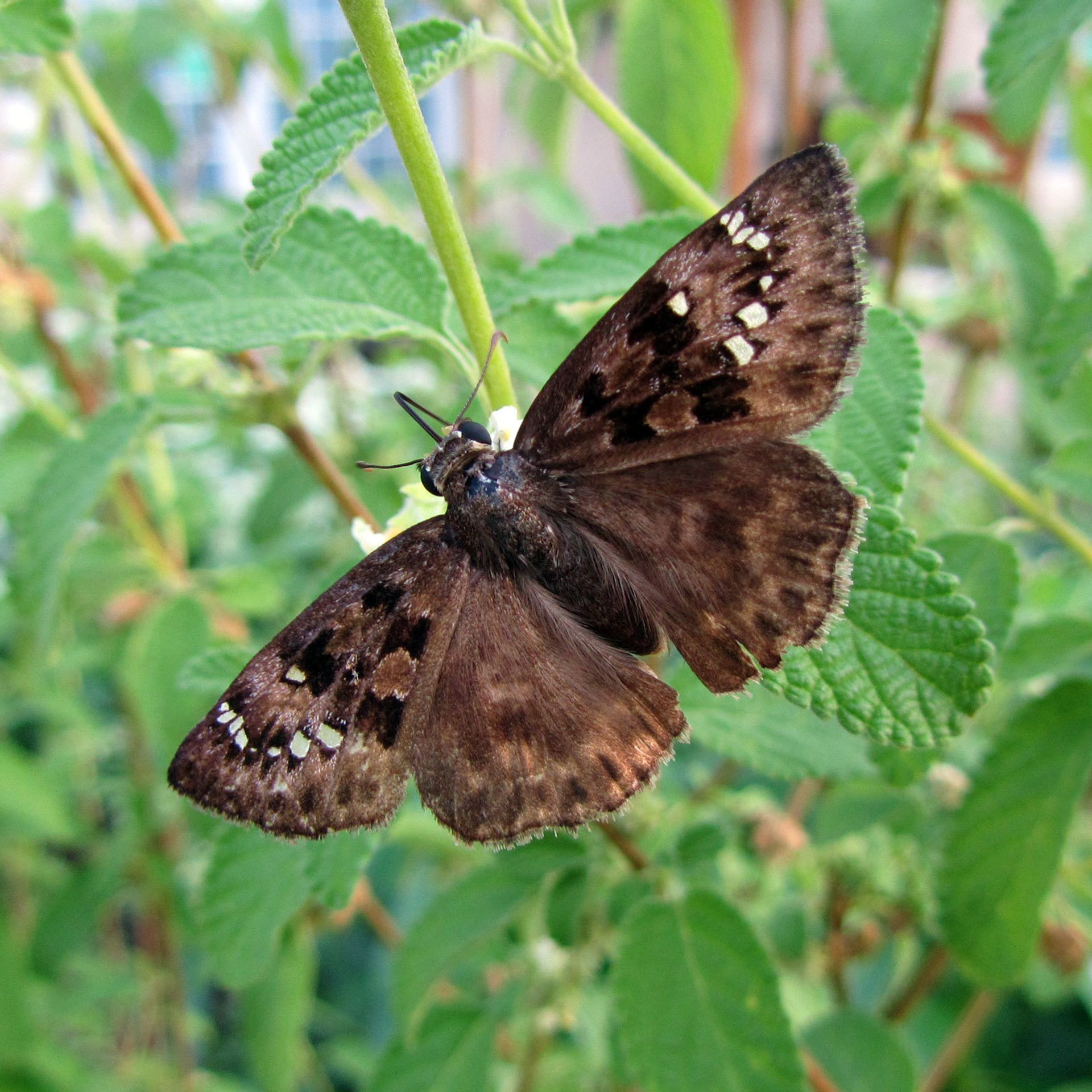
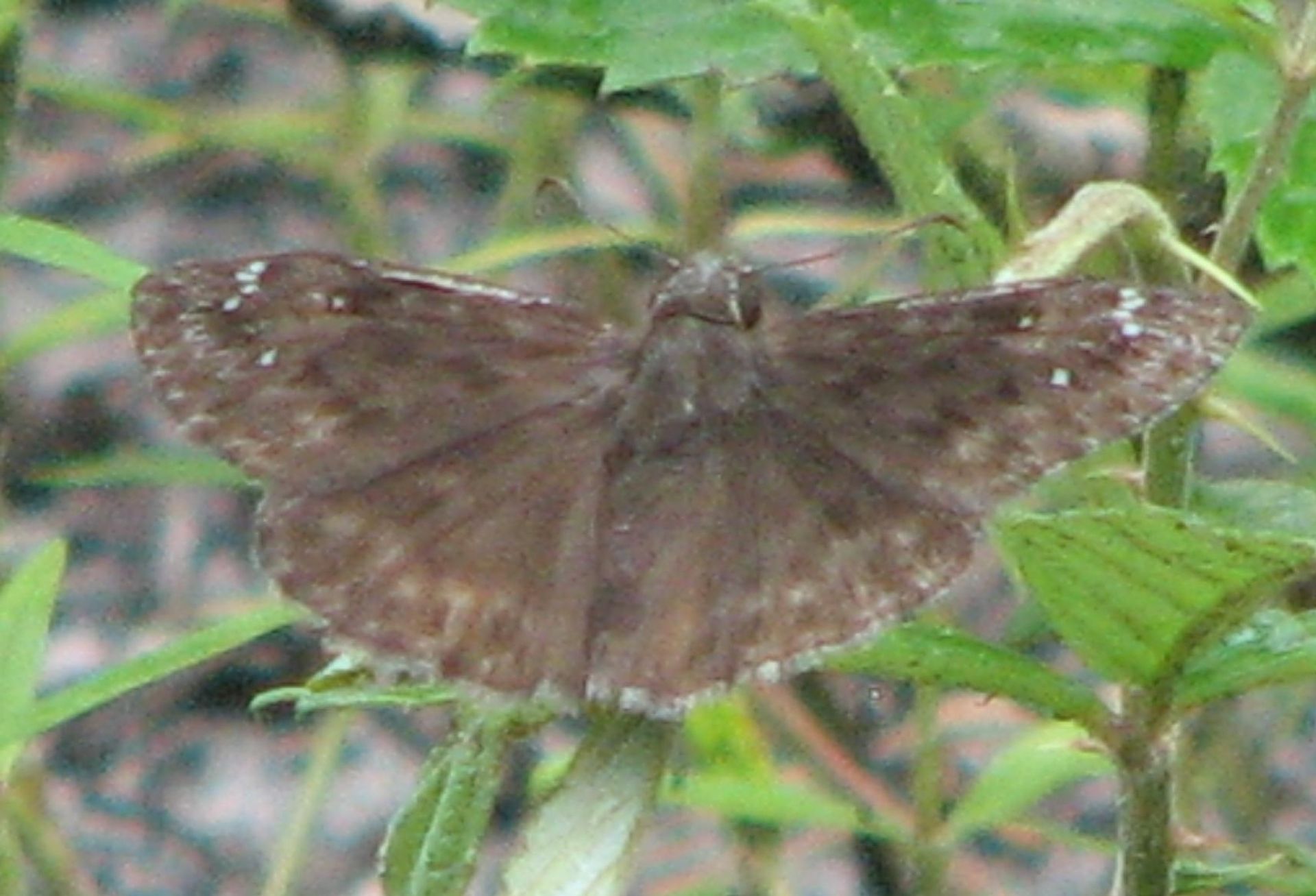
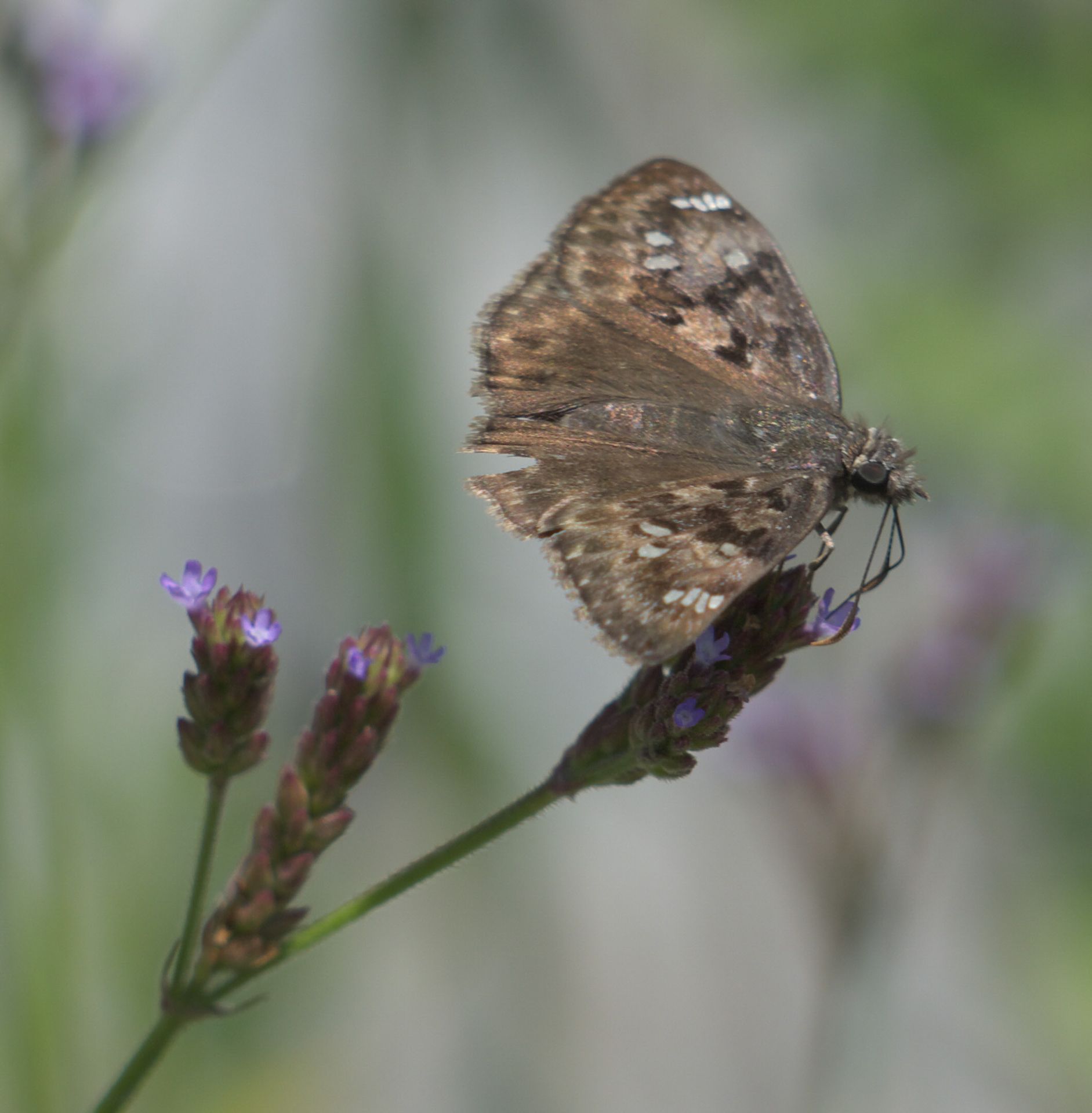
Erynnis horatius, commonly known as Horace's duskywing, is a in the Hesperiidae. It is distributed across much of the eastern and central United States, with extending from Massachusetts to Florida and westward to the Great Plains and southwestern states. The exhibits in wing coloration and is closely associated with oak woodlands throughout its range. It is listed as a species of special concern in Connecticut.
Pronunciation
How to pronounce Erynnis horatius: /ˈɛɹənɪs hoʊˈɹeɪʃəs/
These audio files are automatically generated. While they are not always 100% accurate, they are a good starting point.
Identification
Differs from Erynnis juvenalis (Juvenal's duskywing) by the absence of one or two dots on the hindwing; E. juvenalis possesses these spots and is restricted to early spring , while E. horatius flies throughout summer. pronounced: males dark brown above with reduced patterning, females lighter with bold transparent spots. The combination of dark fringes, lack of ventral hindwing spots, and extended flight season separates this from similar .
Images
Appearance
Wingspan 36–49 mm. Upperside of male forewing dark brown with little contrast and no white overscaling; upperside of female forewing light brown with contrasting pattern and large transparent spots. Underside of hindwing usually lacks two spots below the apex. Fringes brown. Male possesses a costal fold containing yellow scent ; female has a patch of scent scales on the 7th abdominal segment.
Habitat
Open woodlands and edges, clearings, fence rows, wooded swamps, power-line right-of-ways, open fields, and roadsides. Strongly associated with oak-containing due to larval plant requirements.
Distribution
Eastern and central United States: from Massachusetts south to Florida, west to eastern South Dakota, the Gulf Coast, and Texas; western in south-eastern Utah, Colorado, north-eastern Arizona, and New Mexico. Also present in Middle America.
Seasonality
Two in northern range, on wing April to September. Three generations in deep south and Texas, adults on wing January to November. Peak activity varies regionally with latitude.
Diet
Larvae feed on various oak (Quercus): willow oak (Q. phellos), northern red oak (Q. velutina), scrub oak (Q. ilicifolia), water oak (Q. nigra), post oak (Q. stellata), and live oak (Q. virginiana). consume nectar from flowers up to approximately 1.4 m above ground, including dogbane, buttonbush, sneezeweed, goldenrod, peppermint, boneset, and winter cress.
Host Associations
- Quercus phellos - larval willow oak
- Quercus velutina - larval northern red oak
- Quercus ilicifolia - larval scrub oak
- Quercus nigra - larval water oak
- Quercus stellata - larval post oak
- Quercus virginiana - larval live oak
Life Cycle
Multivoltine with two in northern portions of range and three generations in southern portions. Larval development occurs on oak foliage. details not documented in available sources.
Behavior
have been observed nectaring at low flowers, typically below 1.5 m height. rapid and erratic, characteristic of skippers. Males use costal fold scent for courtship; females possess abdominal scent scales.
Ecological Role
Larval herbivore on oaks; . Serves as prey for various . Part of oak woodland .
Human Relevance
Listed as of special concern in Connecticut, indicating conservation priority in that state. Subject of citizen science observation and monitoring programs. No significant agricultural or economic impact documented.
Similar Taxa
- Erynnis juvenalisSimilar appearance and early spring , but distinguished by presence of one or two dots on hindwing and restricted to single spring
More Details
Conservation Status
of special concern in Connecticut; no federal listing
Taxonomic Note
Formerly placed in Hesperiidae Pyrginae; some classifications recognize tribe Erynnini