
Clostera
Samouelle, 1819
Species Guides
10- Clostera albosigma(sigmoid prominent)
- Clostera apicalis(apical prominent)
- Clostera brucei(Bruce's Chocolate-tip Moth)
- Clostera inclusa(angle-lined prominent moth)
- Clostera inornata
- Clostera jocosa
- Clostera multnoma
- Clostera ornata
- Clostera paraphora
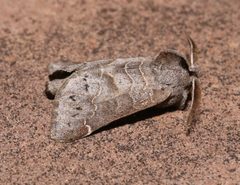
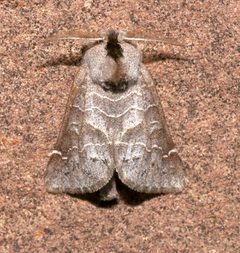
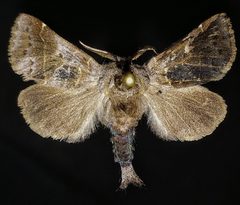
Clostera is a of in the Notodontidae, Pygaerinae, containing approximately 30 described distributed across the Holarctic and Oriental regions. Multiple species, including C. anachoreta, C. anastomosis, C. fulgurita, and C. cupreata, are recognized as significant defoliators of poplar (Populus) trees in forestry contexts across China, India, Europe, and Japan. The genus has been extensively studied for its economic impact and as a target for and Bt toxin research.
Pronunciation
How to pronounce Clostera: /ˈklɒstərə/
These audio files are automatically generated. While they are not always 100% accurate, they are a good starting point.
Images
Habitat
Associated with poplar woods and plantations; such as C. anachoreta, C. anastomosis, C. fulgurita, and C. cupreata have been documented specifically in Populus-dominated environments.
Distribution
Documented from China, Europe, Japan, India, and North America (Vermont, US); includes Scandinavian records (Denmark, Norway, Sweden). Distribution varies by : C. anachoreta occurs in China, Europe, Japan, and India; C. fulgurita in Punjab, India; C. inclusa in North America.
Diet
Larval feeding on Populus (poplars) has been documented for C. anachoreta, C. anastomosis, C. fulgurita, and C. cupreata; specific diet breadth for other is not established.
Host Associations
- Populus - larval plantDocumented for multiple including C. anachoreta, C. anastomosis, C. fulgurita, and C. cupreata
Life Cycle
For C. anastomosis: peak female occurs on day 6 after , peak male emergence on day 7; oviposition primarily within 3 days after mating, with 49.8% of deposited on the first day. C. inclusa is multivoltine.
Behavior
C. anastomosis exhibits in and ; courtship begins at the sixth hour of scotophase, peaking between the 10th hour of scotophase and first hour of photophase; mating success highest for 1-day-old females, declining to zero by day 4. C. inclusa larvae are tentmakers.
Ecological Role
Defoliator of poplar trees; serves as for including Aleoides percurrens (larval parasitoid) and Ooencyrtus ennomophagus ( parasitoid); preyed upon by Canthecona furcellata.
Human Relevance
Significant forestry pest causing defoliation of poplar plantations; target of research using natural enemies (Canthecona furcellata, Aleoides percurrens) and Bt Cry1Ac toxin studies; C. inclusa used as factitious for rearing .
More Details
Research Significance
Clostera are important model organisms for studying insect-plant interactions, Bt toxin resistance mechanisms, and . C. anachoreta transcriptome analysis identified candidate genes (HSC70, GNB2L/RACK1, PNLIP, BI1-like, arylphorin type 2, PKM) and the PI3K-Akt as potentially involved in Cry1Ac toxin response and recovery.
Natural Enemies
Documented biocontrol agents include the Canthecona furcellata (optimum temperature 15-20°C) and the braconid larval Aleoides percurrens (optimum temperature 20-25°C), both - dependent. The encyrtid parasitoid Ooencyrtus ennomophagus has been reared on C. inclusa eggs.
Sources and further reading
- BugGuide
- Wikipedia
- GBIF taxonomy match
- iNaturalist taxon
- NCBI Taxonomy
- Catalogue of Life
- Emergence and Reproductive Rhythm of Clostera anastomosis (Lepidoptera: Notodontidae)
- Midgut Transcriptome Analysis of Clostera anachoreta Treated with Cry1Ac Toxin
- Prospective biological control agents for regulation of population of Clostera fulgurita (Walker) on Poplar in Punjab
- PREY DEPRIVATIONS ON THE PREDATORY RATE OF CANTHECONA FURCELLATA WOLFF. (HEMIPTERA: PENTATOMIDAE) ON POPLAR DEFOLIATOR, CLOSTERA FULGURITA WALK
- REARING THE EGG PARASITE OOENCYRTUS ENNOMOPHAGUS (HYMENOPTERA: ENCYRTIDAE) ON EGGS OF CLOSTERA INCLUSA (LEPIDOPTERA: NOTODONTIDAE) KEPT BELOW FREEZING
- Inhibitory effects of alkaloids from Sophora alopecuroids on feeding, development and reproduction of Clostera anastomosis
- Enhanced DNA Extraction Protocol for Larvae and Adult Specimens of Clostera cupreata (Butler) (Lepidoptera: Notodontidae): A Key Leaf Defoliator of Poplar Trees
- Midgut transcriptome analysis of Clostera anachoreta treated with lethal and sublethal Cry1Ac protoxin