
Datana perfusa
Dyar, 1923
Large Datana
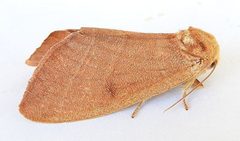
Datana perfusa is a of prominent in the Notodontidae, commonly known as the Large Datana. Described by Harrison Gray Dyar in 1923, this moth is part of a whose larvae are well-known defoliators of hardwood trees. The genus Datana includes several species whose caterpillars feed gregariously and are frequently documented as late-season defoliators of oaks and other hardwoods. While specific details for D. perfusa are limited, the genus is characterized by distinctive caterpillars with warning coloration and defensive .
Pronunciation
How to pronounce Datana perfusa: /dəˈtɑːnə pɚˈfjuːsə/
These audio files are automatically generated. While they are not always 100% accurate, they are a good starting point.
Identification
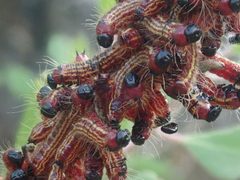
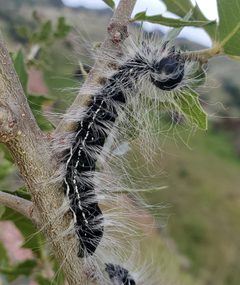
Datana are typically stout-bodied with cryptic brown or gray coloration that provides camouflage against tree bark. The can be challenging to identify to level based on adults alone; genitalic examination is often required for definitive identification. Larvae of Datana species are more readily recognized: they possess distinctive longitudinal stripes, often in black, yellow, and white, with prominent tufts of setae. When disturbed, Datana caterpillars characteristically raise their and tail ends in a U-shaped defensive posture, a shared with other notodontid larvae. D. perfusa is reportedly among the larger species in the genus, consistent with its .
Images
Habitat
Associated with hardwood forests and woodlands, particularly those containing oak (Quercus). The Datana is found in deciduous and mixed forest where trees are abundant.
Distribution
Native to North America. The Datana ranges across much of the eastern and central United States, with some extending into southern Canada and Mexico. Specific distribution records for D. perfusa are sparse, but the species has been documented in the southwestern United States including Arizona.
Seasonality
are active during the warmer months, typically late spring through summer. Larvae are present in summer and early fall, with the being noted as late-season defoliators.
Diet
Larvae feed on leaves of hardwood trees, particularly oaks (Quercus spp.). The Datana is documented as feeding on Fagaceae, with specific associations varying by .
Host Associations
- Quercus - larval foodplantoaks
Life Cycle
Complete with , larva, pupa, and stages. Females deposit eggs on plant foliage. Larvae feed gregariously in early instars, often skeletonizing leaves; later instars may feed individually and consume entire leaves. Mature larvae descend to the ground to pupate in soil or leaf litter, where they overwinter. Adults emerge the following season.
Behavior
Larvae are gregarious, particularly in early instars, feeding in groups that can cause localized heavy defoliation. When disturbed, larvae adopt a characteristic U-shaped defensive posture with and tail raised. This , combined with aposematic coloration, likely serves as a warning to . are and attracted to light.
Ecological Role
As a folivore, larvae function as primary consumers in forest . Their late-season feeding typically has minimal impact on overall tree health, as most has already occurred. They serve as prey for various , , and insectivorous birds.
Human Relevance
Larvae can cause noticeable defoliation of ornamental and shade trees, occasionally attracting public concern. However, late-season defoliation by Datana is generally not economically damaging to forest health. Management is rarely necessary; when warranted, mechanical removal of larvae or targeted applications may be used.
Similar Taxa
- Datana integerrimaWalnut caterpillar, similar larval and ; distinguished by association (Juglans vs. Quercus) and subtle differences in genitalia
- Datana ministraYellow-necked caterpillar, overlaps in range and use; larvae have more pronounced yellow coloration on the neck region
- Anisota senatoriaOrangestriped oakworm, similar late-season oak defoliator with gregarious larvae; distinguished by orange stripes and lack of prominent setal tufts
- Symmerista spp.Related notodontid with similar larval defensive posture; often require examination of genitalia or larval specificity for separation
Sources and further reading
- BugGuide
- GBIF taxonomy match
- iNaturalist taxon
- NCBI Taxonomy
- Catalogue of Life
- Insects and mites that feed on leaves - AgriLife Extension Entomology
- Bug Eric: Wasp Wednesday: Ammophila procera
- Much Ado About Nothing? End-of-Summer Defoliation Heats Up
- Bug Eric: November 2010
- 2018 Arizona Insect Collecting Trip “iReport” | Beetles In The Bush