
Datana ministra
(Drury, 1773)
yellownecked caterpillar, Yellow-necked Caterpillar Moth
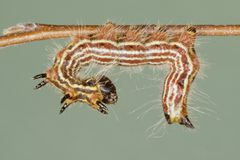
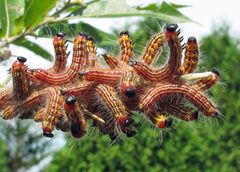
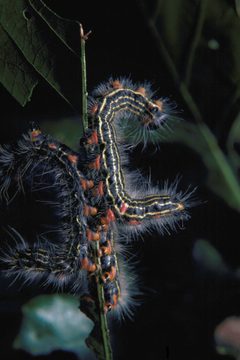
Datana ministra is a in the Notodontidae, commonly known as the yellownecked caterpillar. The is distributed across southern Canada and the eastern United States, extending west to California. have a wingspan of approximately 42 mm and produce one per year. The larvae are notable defoliators of various hardwood trees.
Pronunciation
How to pronounce Datana ministra: /dæˈteɪnə mɪˈnɪstrə/
These audio files are automatically generated. While they are not always 100% accurate, they are a good starting point.
Images
Distribution
Southern Canada (Alberta, Manitoba, Saskatchewan, Vermont) and the United States east of the Rocky Mountains; southwestern range extends to California.
Seasonality
One per year ().
Diet
Larvae feed on Malus (apple), Quercus (oak), Betula (birch), and Salix (willow) .
Host Associations
- Malus - larval food plant
- Quercus - larval food plant
- Betula - larval food plant
- Salix - larval food plant
Life Cycle
One per year. overwinter. Larvae feed on plants during growing season. and timing not specified in sources.
Ecological Role
Larval defoliator of hardwood trees; contributes to natural nutrient cycling through leaf consumption. likely regulated by natural enemies including predatory such as Ammophila procera, which has been documented to use Datana caterpillars as prey.
Human Relevance
Occasional pest of ornamental and fruit trees; larvae can cause noticeable defoliation. Generally not considered economically significant.
Similar Taxa
- Datana integerrimaWalnut caterpillar — congeneric with similar and larval habits; both are Notodontidae defoliators of hardwoods
- Anisota senatoriaOrangestriped oakworm — another late-season defoliator of oaks with gregarious larval , though in Saturniidae rather than Notodontidae
More Details
Subspecies
Two recognized: Datana ministra ministra (nominate form) and Datana ministra californica Dyar, 1890 (restricted to California region)
Predation
Documented as prey of the thread-waisted wasp Ammophila procera, which paralyzes caterpillars to provision nests
Sources and further reading
- BugGuide
- Wikipedia
- GBIF taxonomy match
- iNaturalist taxon
- NCBI Taxonomy
- Catalogue of Life
- Insects and mites that feed on leaves - AgriLife Extension Entomology
- Bug Eric: November 2010
- Bug Eric: Wasp Wednesday: Ammophila procera
- Much Ado About Nothing? End-of-Summer Defoliation Heats Up
- 2018 Arizona Insect Collecting Trip “iReport” | Beetles In The Bush